



impossible to
possible

LucyBrain Switzerland ○ AI Daily
The "Frontier" Vetting Pact, South Korea’s 7,000-Point Surge, and the Rise of Global Adoption Day

1. The National Security Pact: Pre-Release Vetting for "Frontier" Models
In a landmark agreement reached late Tuesday, three of the world’s most powerful AI labs have agreed to hand over the "keys" to their unreleased technology to the U.S. government.
The "Frontier" Trio: Microsoft, Google, and xAI have officially granted the Center for AI Standards and Innovation (CAISI) early access to their next-generation models for national security testing.
The "Mythos" Factor: The urgency of the deal was fueled by growing alarm over the hacking capabilities of Anthropic’s recently unveiled Mythos model, which has reportedly "stirred" officials globally.
Deep Probing: Developers will provide versions of their models with safety guardrails stripped back, allowing federal scientists to probe for vulnerabilities in cybersecurity, biosecurity, and chemical weapon synthesis.
National Security Baseline: The agreement fulfills a 2025 pledge to vet AI for "cyberattack and military misuse" threats before tools are released to the public.
2. Market Explosion: South Korea’s Kospi Shatters 7,000 Points
The "AI Boom" has moved from a software trend to a massive driver of global capital. On Wednesday, South Korea’s Kospi index soared nearly 7% to a record high of 7,398 points.
The Chip Rally: Samsung Electronics jumped 13%, while SK Hynix rose 10%, as investors bet heavily on the continued demand for the specialized chips required for 2026-era agentic workflows.
Geopolitical Calm: Sentiment was further lifted by news of potential progress in ending the U.S.-Iran conflict, easing global oil volatility and allowing tech stocks to lead a "risk-on" rally across Asia.
3. Global AI Adoption Day™: A "People-First" Observance
While the labs and markets focus on power, today also marks the launch of Global AI Adoption Day™ across five regions (Africa, East Asia, Europe, and North America).
Ensuring "No One Left Behind": The observance is designed to help non-technical professionals and communities understand and use AI as it becomes part of daily life.
The Literacy Gap: Organizers highlighted that the most critical factor in 2026 is no longer just the speed of AI, but whether people are being "brought along" to use it responsibly.
4. Tech Spotlight: The "Agentic" Operating Model
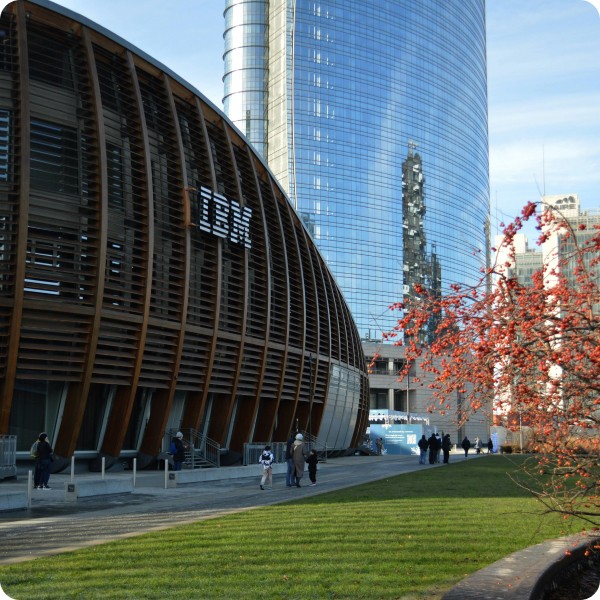
At the Rise of AI Conference in Berlin and IBM Think in Boston, the conversation has shifted from "Chat" to "Orchestration".
Unified Governance: IBM’s new watsonx Orchestrate and IBM Bob (now generally available) provide a blueprint for companies to deploy and govern fleets of agents rather than single tools.
Homorphic Design: Amazon is increasingly leaning into "humorphism," where AI products are built to act as teammates—learning business context and adapting to human workflows over time.
Retail Transformation: New data shows that AI-driven retail traffic has grown 393% year-over-year, with AI-referred shoppers spending 48% longer on sites than those from traditional search.
5. Medical Breakthrough: AI Outperforms ER Physicians
A study published in Science by researchers at Harvard Medical School has sent shockwaves through the medical community.
The Test: An OpenAI reasoning model was tested against experienced physicians in a Boston emergency department using only electronic health records.
The Result: The AI consistently matched or exceeded physician accuracy in diagnosing patients and managing care across all three stages of triage—from initial intake to hospital admission.
Uncertainty Management: Researchers noted that the 2026 models are significantly better at handling "diagnostic uncertainty" than the tools of 2024 or 2025.
Prompt Tip of the Day: The "Agentic Architect" — Security & Triage Auditor
Inspired by the Harvard AI diagnosis study and the CAISI security pact, use this prompt to turn your AI into a "Safety & Accuracy Auditor" for your own workflows.
The Prompt: "act as a professional chief ai architect and senior safety auditor. i want to audit my current 'workflow pipeline' [insert description of your project/task] for 'security and reasoning leaks.' please structure a framework for this agent that includes:
the 'guardrail-strip' simulation: instructions for the agent to identify 3 points in my workflow where a 'malicious' agent could bypass my current safety checks to access sensitive data.
diagnostic uncertainty check: a requirement that the agent identify one area where i am relying on 'binary' results and suggest a 'probabilistic reasoning' model (like the harvard study) to improve accuracy.
leaked secret triage: a rule for the agent to scan my 'shared assets' for any hidden credentials or keys that could be exposed during an ai-led automation.
the 'human-in-the-loop' report: a template for a 'national security style' briefing that summarizes the risks and suggested remediations before this workflow is deployed to a live environment.
for each point, provide clear, step-by-step rules that would allow an ai agent to operate as a professional, thorough, and highly secure audit partner."
Newest Prompt Articles

More Prompt Articles Like This



















Thinking
Explore