



impossible to
possible

LucyBrain Switzerland ○ AI Daily
IBM’s "Agentic Operating Model," the Data Center Resistance, and NASA’s RAVEN Discovery
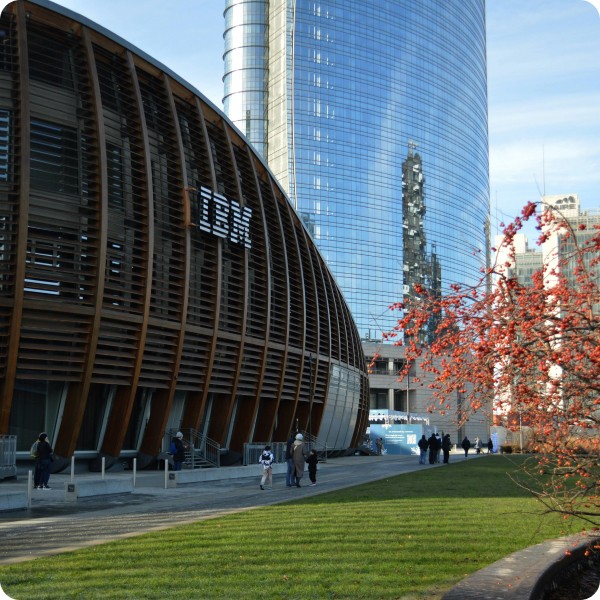
1. IBM Think 2026: The Blueprint for the "Agentic Enterprise"
At its annual Think conference in Boston today, IBM unveiled its most comprehensive expansion of enterprise AI to date, moving beyond pilots to a full "AI Operating Model".
IBM Bob Goes Global: IBM announced the general availability of IBM Bob, an "agentic development partner" designed for the enterprise. Unlike standard assistants, Bob handles everything from system design and refactoring legacy code to security and deployment.
The Orchestration Plane: The next generation of watsonx Orchestrate was introduced as a "centralized control plane" for multi-agent eras. It allows companies to manage and govern a fragmented landscape of agents from any source with consistent accountability.
IBM Concert: This new AI-powered operations platform moves organizations from passive monitoring to "coordinated, intelligent response" by connecting signals across a hybrid cloud estate into a single context.
Sovereign Core: Addressing global regulation, IBM launched Sovereign Core, a platform that embeds governance at the infrastructure level, allowing governments and firms to run AI-ready environments with total control over data and operations.
2. The Infrastructure Backlash: Violent Threats and Resistance
As Big Tech races to build the "Superfactories" of AI, a report released today by The Soufan Center warns of an accelerating wave of resistance against data center construction.
Targeting the "Hinge": Anti-AI rhetoric is increasingly targeting local community officials who represent the "hinge" where abstract AI projects become concrete local decisions.
Global Footprint: Resistance has moved beyond the U.S., with significant anti-data center movements appearing in Malaysia and Spain.
Grievance Cascades: Analysts warn that as tech executives harden their personal security, grievances are cascading downward toward locally identifiable officials and the physical sites of data center construction.
3. RAVEN: AI Discovers 100+ Hidden Planets
In a major win for "Discovery AI," astronomers at the University of Warwick announced today that their new AI system, RAVEN, has confirmed over 100 exoplanets within NASA data.
Precision Mining: RAVEN combed through data from NASA's TESS mission, analyzing over 2.2 million stars to find dips in starlight.
Rare Worlds: The discovery includes 31 entirely brand-new worlds, including extreme planets that orbit their stars in less than 24 hours and others hidden in the "Neptunian desert".
Validation at Scale: The pipeline validated 118 new planets and identified over 2,000 high-quality candidates, representing one of the best-characterized samples of close-in planets to date.
4. Pinecone Nexus: Knowledge Infrastructure for Agents
Pinecone announced its expansion into the AWS Europe (Frankfurt) region today, coinciding with the launch of Pinecone Nexus.
Knowledge Engine: Nexus is a dedicated knowledge engine built specifically for AI agents, allowing them to retrieve and process enterprise data at massive scales.
KnowQL: The company also introduced KnowQL, a new declarative query language designed to streamline "agentic retrieval".
Tech Spotlight: The Shift to "Agentic" Software Engineering
The industry is observing a massive pivot in how software is built. Modern coding agents in May 2026 are moving beyond autocompletion to:
Repository Awareness: Understanding an entire codebase, not just the current file.
Autonomous Debugging: Identifying an issue, writing the fix, running tests, and creating a pull request without human intervention.
Terminal-First Workflows: Moving AI out of the browser and directly into the command line and shell-integrated assistants.
Prompt Tip of the Day: The "Agentic Architect" — Legacy Code Auditor
Inspired by the launch of IBM Bob, use this prompt to turn your AI into a "Modernization Partner" that audits your old projects for "agentic readiness."
The Prompt: "act as a professional chief ai architect and senior software modernization consultant. i want to audit a legacy codebase [insert tech stack, e.g., 'a 15-year-old php application'] for 'agentic readiness.' please structure a framework for this agent that includes:
dependency debt scan: instructions for the agent to identify the top 3 'security-critical' libraries that would prevent an autonomous agent from performing a secure update.
modernization roadmap: a requirement that the agent estimate the 'engineering hours saved' if a specialized coding agent (like ibm bob) were to handle the refactoring vs. a human team.
agentic safety perimeter: a rule where the agent must identify which parts of the application require 'human-in-the-loop' approval before an ai is allowed to commit changes.
the 'vibe coding' template: a template for a report that shows how i can move from 'writing code' to 'orchestrating agents' for this specific project.
for each point, provide clear, step-by-step rules that would allow an ai agent to operate as a professional, thorough, and highly strategic engineering partner."
Newest Prompt Articles

More Prompt Articles Like This





















Thinking
Explore