


impossible to
possible

LucyBrain Switzerland ○ AI Daily
Sora 2 and the "GPT-3.5 Moment" for Video
Sora 2 and the "GPT-3.5 Moment" for Video
OpenAI officially launched Sora 2 today, accompanied by a dedicated iOS app that brings high-fidelity video generation to the consumer's pocket. This isn't just a resolution bump; OpenAI is calling it a breakthrough in World Modeling.
Physics Engine Integration: Unlike the original Sora, which often struggled with object permanence, Sora 2 accurately models the dynamics of buoyancy, gravity, and rigidity. It can now render complex physical feats—like a cat performing a triple axel while maintaining fur consistency and momentum—without visual "hallucinations."
The "Characters" Feature: Users can now inject their own likeness or specific objects into a generated scene via a feature called "Characters," allowing for personalized cinematic storytelling.
The Sora Social Feed: The app includes a remixable feed where users can "fork" each other's physical simulations, adjusting parameters like lighting or gravity in real-time.
CES 2026 Highlights: LEGO Bricks and Ambient Agents
The show floor in Las Vegas closed today with two massive wins for consumer hardware:
1. LEGO "Smart Bricks"
LEGO has officially moved into the "Smart Play" category. These are standard 2x4 bricks packed with sub-millimeter sensors, LEDs, and wireless connectivity.
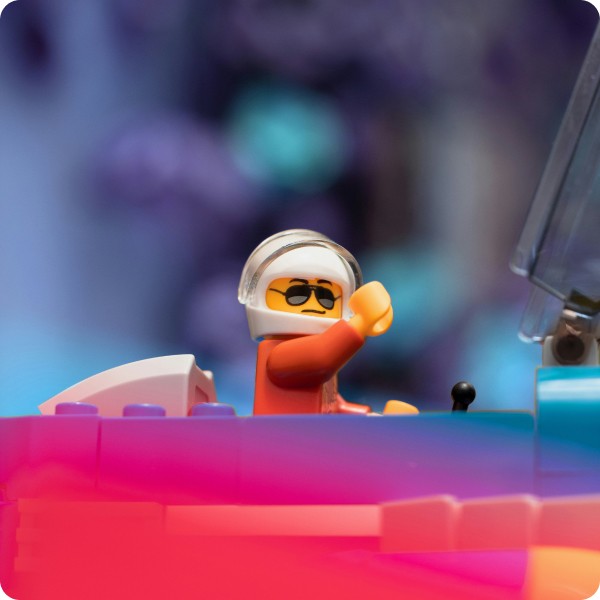
Logic-Based Building: When a child builds a structure, the bricks "communicate" via a mesh network. A "Smart Minifigure" placed in a car can recognize the orientation of the vehicle and trigger engine sounds or headlights automatically.
Screen-Free Interaction: The focus is on moving AI away from the tablet and back into the physical world, using on-device logic to respond to motion and touch.
2. Lenovo’s Qira: The Cross-Device "Ambient" Agent
Lenovo and Motorola unveiled Qira, a personal agent that lives across your ecosystem rather than on a single device.
Contextual Handoff: Qira can track a task from your ThinkPad to your Motorola phone to your smart glasses seamlessly. If you are researching a recipe on your laptop, Qira automatically populates your smart glasses' display with the ingredients list once you enter the kitchen.
Frontier Models: GPT-5.1 and "Adaptive Reasoning"
Released late yesterday, GPT-5.1 has introduced a new paradigm called Adaptive Reasoning.
Variable Thinking Time: For the first time, the model decides when to think. Simple queries are answered instantly, while complex logical puzzles trigger a "Thinking" state where the model allocates more compute to verify its own logic before responding.
Efficiency Gains: On NVIDIA’s new Vera Rubin hardware, the cost per token (C) for these reasoning models has dropped significantly:
CRubin≈101×CBlackwell
This 90% reduction in inference cost is expected to make "Always-On" AI assistants financially viable for the first time.
The 2026 Cybersecurity Outlook: Adaptive Malware
A report from Moody’s published this morning warns that while consumer AI is flourishing, 2026 will see the rise of Adaptive Malware.
Model Poisoning: Hackers are increasingly targeting the training data of small, local-first models.
Autonomous Attacks: Experts predict the first "Autonomous Phishing" campaigns, where agents can conduct multi-day social engineering conversations with humans to extract credentials without any direct hacker intervention.
Prompt Tip of the Day: The Physical Constraints Prompt
With models like Sora 2 and Gemini 2.0 now understanding physical world logic, your prompts should focus on Environmental Constraints rather than just visual descriptions.
Act as a World Simulator. Generate a [Video/Description] of a [Object] falling into [Liquid].
Specify the Viscosity: Make the liquid as thick as honey.
Specify the Mass: The object should be a hollow plastic sphere.
The Interaction: Show how the surface tension breaks and how long it takes for the sphere to resurface.