


impossible to
possible

LucyBrain Switzerland ○ AI Daily
Personalized Vaccines, the "Inference Flip," and the $15,000 Humanoid

1. The "B-Cell" Breakthrough: A World-First in Personalized Cancer Vaccines
In a massive win for precision medicine, a joint team from KAIST and Neogenlogic announced today the successful validation of a new AI framework for "personalized" cancer vaccines.
Beyond T-Cells: While previous vaccines focused on immediate T-cell attacks, this AI model identifies neoantigens that trigger a robust B-cell immune memory.
The Result: This provides long-term "antitumor surveillance," effectively training the body to prevent cancer recurrence years after the initial treatment.
The Roadmap: The team is filing for FDA Investigational New Drug (IND) status this week, with clinical trials expected to scale by the end of 2026.
2. The "Inference Flip": NVIDIA & Groq Redefine the Market
Financial analysts confirmed today that for the first time in history, global revenue from AI Inference (running models) has officially surpassed revenue from AI Training (building models). * The NVIDIA-Groq Power Play: Following their $20 billion licensing deal, NVIDIA has begun integrating Groq’s LPU (Language Processing Unit) technology into its new "Vera Rubin" architecture.
Speed Metrics: By moving from standard GPU memory to Groq’s on-chip SRAM approach, the speed of autonomous agents has jumped from 100 tokens per second to over 750 tokens per second, with 10× better energy efficiency.
Why it Matters: This "Inference Flip" signals that the industry is no longer in an experimental phase; we are in the deployment phase where speed and cost-per-token are the only metrics that matter.
3. The Humanoid Price Crash: Unitree vs. 1X NEO
If 2025 was the year we saw humanoids in labs, 2026 is the year they enter the home.
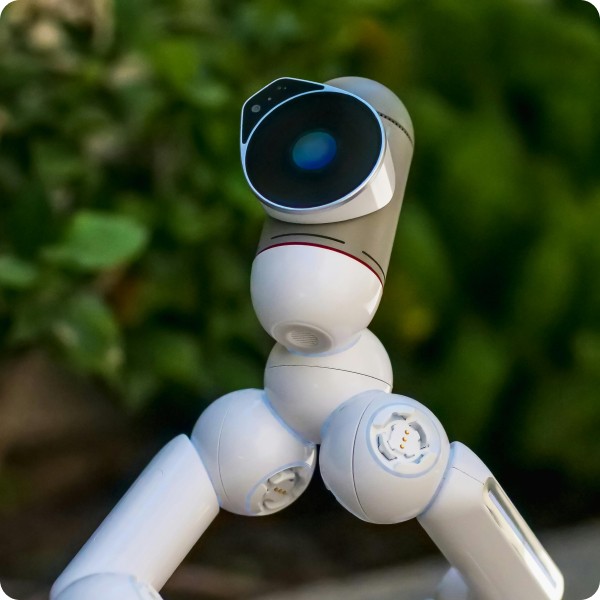
The G1 Factor: Chinese manufacturer Unitree has begun mass-shipping its G1 Humanoid for a disruptive $15,000.
Domestic Competition: In response, 1X (backed by OpenAI) has announced that its "NEO Beta" domestic assistant—designed specifically for elder care and laundry—is shipping to its first 5,000 early adopters this month.
The "General Intelligence" Barrier: These robots are the first to utilize "World Models" that allow them to understand physics (e.g., the weight of a glass or the fragility of a shirt) without being pre-programmed for every specific object.
4. The "FUSE" Zone: AI’s Green Mandate
At the World Future Energy Summit today, the launch of the FUSE AI Zone highlighted how AI is being used to fix the very energy crisis it helped create.
Real-Time Carbon Matching: New AI-driven "Smart Grids" are now being deployed in the MENA region to match data center consumption with renewable generation on an hourly basis.
The "Zero-Water" Standard: Tech leaders are showcasing immersion-cooling systems that allow "Zero-Water" data centers to operate in desert climates, a critical shift for global sustainability goals.
What It Means for You
For Healthcare Professionals
The "Patient Digital Twin" is coming. With the KAIST vaccine breakthrough, the standard of care is shifting from "one-size-fits-all" chemotherapy to Personalized Immunotherapy. Expect to see more AI tools that "simulate" a patient's immune response to a drug before it is ever administered.
For Investors
Follow the "Memory Wall." The success of the NVIDIA-Groq deal proves that the biggest bottleneck in AI is no longer processing power, but data retrieval speed. Companies specializing in high-speed SRAM and next-gen networking are the "pick and shovel" plays of 2026.
For Homeowners
Wait before you buy. While the $15,000 humanoid is tempting, the software "Drift" (where robots become less accurate over time) is still a concern. 2026 will be a year of rapid firmware updates. If you aren't an early adopter, the Q4 2026 models will likely be significantly more stable.
Prompt Tip of the Day
The "Inference Efficiency Audit" Prompt:
"Act as an AI Infrastructure Strategist. I am running [Name of AI App/Agent].
Based on the January 2026 'Inference Flip' data, analyze the cost-efficiency of using a standard GPU-cloud provider versus an LPU-optimized (Groq-style) provider for my specific throughput.
Suggest 3 ways to optimize my System Prompt to reduce token 'waste' and bring my latency under 100ms per response."