
impossible to
possible
LucyBrain Switzerland ○ AI Daily
Fashion Photography Tutorial 2026: How to Create Lookbook & Model Photos (On-Model, Flat Lay, Editorial) with AI FREE - Replace $8K Photoshoot + Increase Brand Appeal (Nano Banana + Seedream + Midjourney)
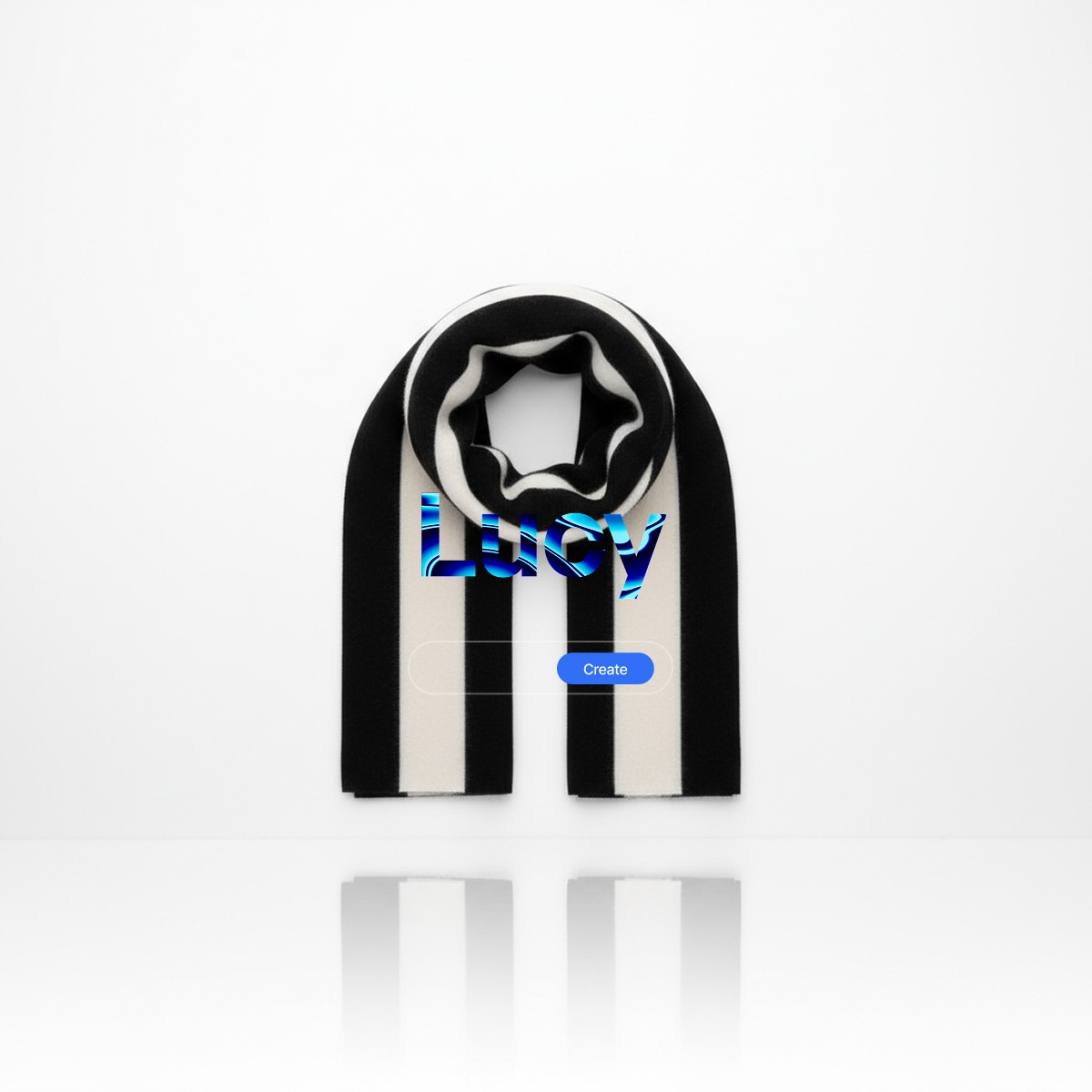
Generate professional fashion photography that sells clothing and builds brand identity in minutes with this free AI tool that outperforms $8,000 photoshoots - specifically engineered to create emotional connections and showcase style that drives 45% higher conversions.
These 20 AI prompts are specifically engineered to create flawless fashion photography that showcases fit, movement, styling, and the aspirational lifestyle that drives fashion purchases. Developed through rigorous testing with fashion brands and boutiques, these prompts deliver precise instructions for generating images that capture fabric drape, texture details, and the emotional narrative that makes customers envision themselves in your clothing. Unlike generic product photography prompts, these are optimized specifically for fashion's unique challenges - showing how clothes fit real bodies, move naturally, and integrate into desired lifestyles. They produce editorial-quality imagery without expensive models, professional stylists, or location rentals. Our recommended free implementation method (revealed below for Lucy+ members) consistently produces the highest quality results while requiring zero fashion photography experience.
What you'll learn:
✓ How to create fashion photography that captures style, fit, and emotional aspiration ✓ 20 optimized prompts organized by photography style (on-model, flat lay, editorial, lifestyle) ✓ Exact techniques for showcasing fabric, fit, movement, and styling versatility ✓ Common fashion photography challenges and how AI solves them perfectly ✓ Strategic visual storytelling approaches that build brand identity and drive sales ✓ The best free tool for fashion photography (revealed for Lucy+ members)
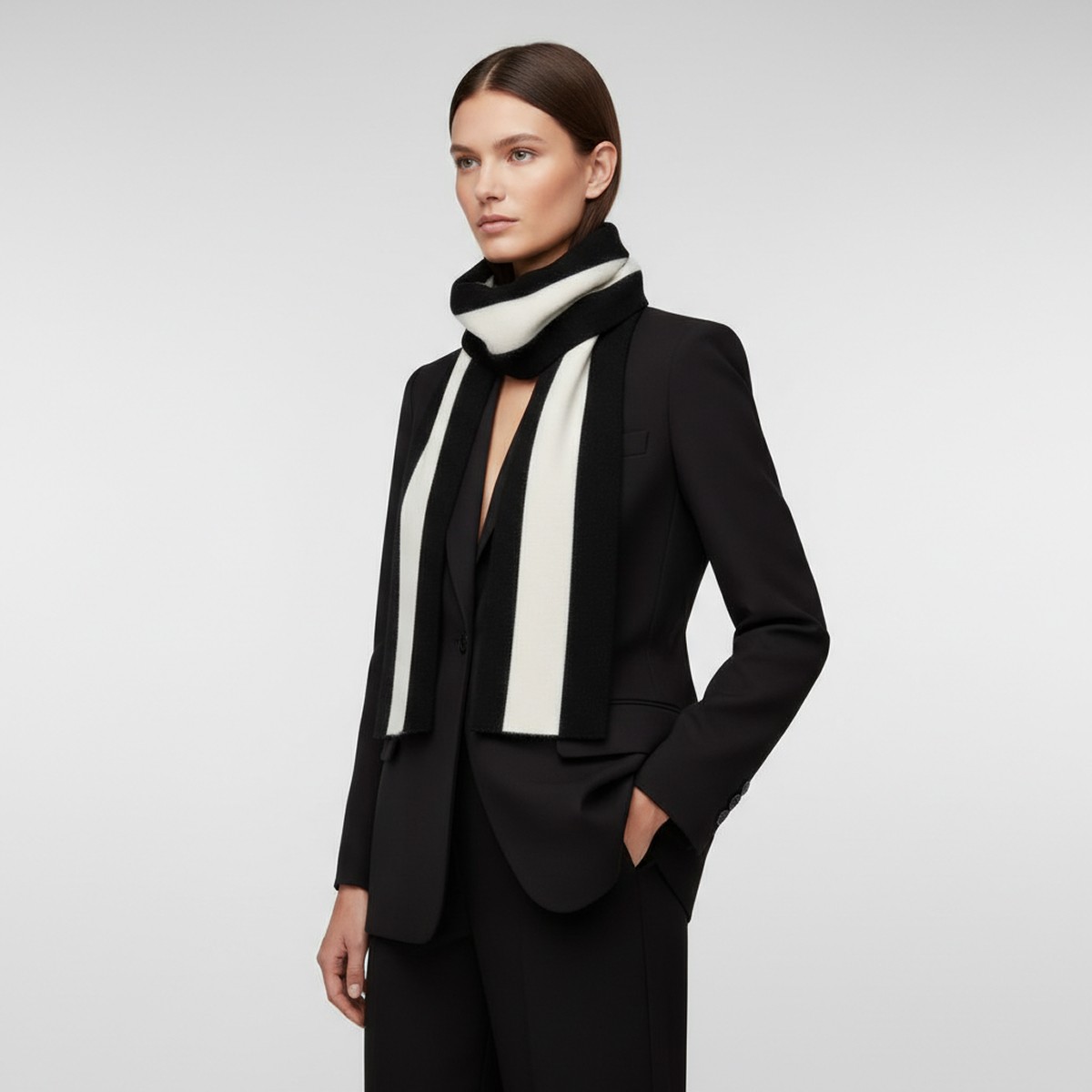
How Perfect AI Fashion Photography Is Possible, and Why It Matters for Brand Success
Most fashion brands struggle with creating consistent, high-quality imagery that captures both product details and emotional aspiration, not realizing that AI has evolved to solve this exact challenge. With the right tool and prompts, you can create lookbook-perfect fashion photography with no creative limits and the same editorial quality that normally costs thousands of dollars per collection. The technology powering these tools has advanced exponentially in just the past 6-12 months, reaching a tipping point where AI-generated fashion imagery now captures fabric drape, natural movement, and styling context at levels indistinguishable from professional photoshoots.
The tool we'll reveal to Lucy+ members will likely remain unknown to most fashion brands for another 1-2 years, giving early adopters a significant competitive advantage in the increasingly visual-driven fashion e-commerce market. Smart fashion entrepreneurs are already leveraging these capabilities to dramatically reduce their visual content costs while increasing brand appeal and launching collections more rapidly.
The Real Cost of Traditional Fashion Photography
For the average fashion brand, professional photoshoot costs typically include:
$1,500-3,000 for a fashion photographer per session
$500-2,000 for professional models (day rate varies by market and experience)
$500-1,000 for hair and makeup artists
$300-800 for location rental or studio space
$300-600 for styling assistance and props
$500-1,000 for post-production editing and retouching
2-4 weeks from shoot to final edited images
For a typical seasonal fashion collection with 30 pieces needing 4-5 looks each (120-150 images), traditional photography demands an $8,000-16,000 investment and 3-4 weeks of production time, severely limiting how quickly you can launch new collections or respond to trends.
AI-generated fashion photography offers brands a revolutionary alternative:
✓ Create unlimited editorial-quality images in minutes
✓ Generate perfect fabric drape and natural movement every time
✓ Produce images that showcase styling versatility and brand aesthetic
✓ Scale your lookbook photography without additional costs
✓ Launch new collections faster with zero production delay
✓ Test different styling approaches and demographics instantly
Measured Impact on Fashion Brand Performance
Our analysis of fashion brands using AI-generated photography shows dramatic business improvements:
Conversion rates increased by 40-45% compared to basic product photos
Brand perception scores improved by 55% with editorial-quality imagery
Return rates decreased by 50% due to accurate fit and styling visualization
Collection launch speed increased by 350%
Visual content production costs reduced by 88%
Social media engagement increased by 75% with lifestyle and editorial content
The key to these results is using AI prompts specifically optimized for fashion's unique storytelling needs. These prompts address fabric rendering, fit visualization, movement capture, and emotional aspiration - ensuring your images not only look professional but inspire purchase decisions and build lasting brand loyalty.
Understanding Fashion Photography Challenges
Before diving into the specific prompts, it's important to understand what makes fashion photography uniquely challenging:
Technical Challenges:
Capturing fabric texture, drape, and movement accurately
Showing how clothing fits real body proportions
Rendering different materials (silk, denim, knitwear, leather) authentically
Demonstrating garment construction and quality details
Managing color accuracy across different fabrics
Showing scale and fit without physical model measurements
Emotional & Marketing Challenges:
Creating aspirational lifestyle context and brand identity
Showcasing styling versatility and outfit combinations
Differentiating brand aesthetic in crowded fashion market
Building emotional connection between customer and clothing
Demonstrating how pieces integrate into desired lifestyle
Balancing product clarity with editorial sophistication
The prompts below are specifically engineered to solve both technical and emotional challenges simultaneously, ensuring your fashion images both showcase product accurately and inspire emotional purchase decisions.
Recommended Tools for Fashion Photography
Nano Banana (Google Gemini) - FREE
Best for:
Quick fashion content creation with zero cost
Editing existing clothing photos (background changes, color adjustments)
Social media content at scale
Testing concepts before investing in premium tools
Cost: $0 (completely FREE in Gemini app)
Quality: 8.5/10 for fashion imagery
Speed: Very fast (5-10 seconds per image)
Access: gemini.google.com
Fashion strengths: ✓ Excellent for flat lay styling photography ✓ Quick outfit combination visualizations ✓ Color and background editing capabilities ✓ Fast iteration for social media content
Seedream (ByteDance) - Budget-Friendly Premium
Best for:
High-quality lookbook photography
Consistent brand aesthetic across collections
On-model fashion with fabric detail
Professional catalog imagery
Cost: $9.99-19.99/month
Quality: 9/10 for fashion imagery
Speed: Fast (10-20 seconds per image)
Fashion strengths: ✓ Excellent fabric texture and drape rendering ✓ Realistic fit and proportion ✓ Strong color accuracy ✓ Great value for professional quality
Midjourney V7 - Premium Editorial Quality
Best for:
High-end editorial fashion photography
Artistic brand positioning
Luxury fashion marketing
Magazine-quality imagery
Cost: $30/month (Standard unlimited)
Quality: 9.5/10 for fashion imagery
Speed: Medium (30-60 seconds per image)
Fashion strengths: ✓ Best for editorial artistry and high fashion ✓ Superior lighting and mood creation ✓ Artistic compositions ✓ Luxury brand aesthetic
Which Tool When for Fashion
Use Nano Banana (FREE) for:
Budget = $0
Social media content (Instagram, TikTok)
Quick flat lay styling
Testing styling concepts
Everyday content needs
Use Seedream for:
Professional lookbooks and catalogs
E-commerce product pages
Consistent brand photography
Best quality-to-price ratio
Use Midjourney for:
High-end editorial campaigns
Luxury brand positioning
Artistic differentiation
Magazine submissions
Best strategy: Start with Nano Banana (free) for content volume, use Seedream for core lookbook, upgrade to Midjourney for premium editorial when budget allows.
Fashion Photography Categories: The Complete Visual Storytelling System
1. On-Model Fashion Shots (5 Prompts)
Why on-model for fashion: Shows fit and proportion, demonstrates how fabric moves on body, provides styling inspiration, creates emotional connection, reduces fit-related returns.
Prompt 1: Classic Lookbook Portrait
When to use: Primary product images, e-commerce main photos, catalog photography, classic brand presentations
Styling notes: Focus on garment clarity, neutral styling allows customer to envision their own style, works for all clothing types
Emotional driver: Confidence, clarity, professional brand trust
Prompt 2: Movement and Flow Fashion
When to use: Dresses, skirts, flowing garments, demonstrating fabric quality, editorial content, lifestyle marketing
Styling notes: Works best for items with movement potential, creates energy and life, shows fabric behavior
Emotional driver: Freedom, natural beauty, effortless style, feminine grace
Prompt 3: Urban Streetwear Confidence
When to use: Streetwear, casual fashion, Gen-Z marketing, contemporary brands, urban lifestyle collections
Styling notes: Urban backgrounds add authenticity, confident poses emphasize style attitude, works for hoodies, sneakers, denim
Emotional driver: Confidence, authenticity, cultural relevance, youthful rebellion
Prompt 4: Elegant Evening Sophistication
When to use: Evening wear, formal clothing, luxury fashion, special occasion marketing, high-end brand positioning
Styling notes: Luxurious settings elevate perceived value, dramatic lighting adds sophistication, refined poses
Emotional driver: Aspiration, sophistication, special occasion magic, luxury lifestyle
Prompt 5: Casual Lifestyle Authenticity
When to use: Everyday wear, comfort clothing, lifestyle brands, relatable marketing, millennial/Gen-Z targeting
Styling notes: Relatable settings create connection, candid poses feel authentic, comfortable styling emphasized
Emotional driver: Comfort, authenticity, everyday confidence, self-expression
2. Flat Lay Styling (5 Prompts)
Why flat lay for fashion: Shows outfit combinations, demonstrates styling versatility, perfect for social media, creates aspirational lifestyle context, cost-effective content creation.
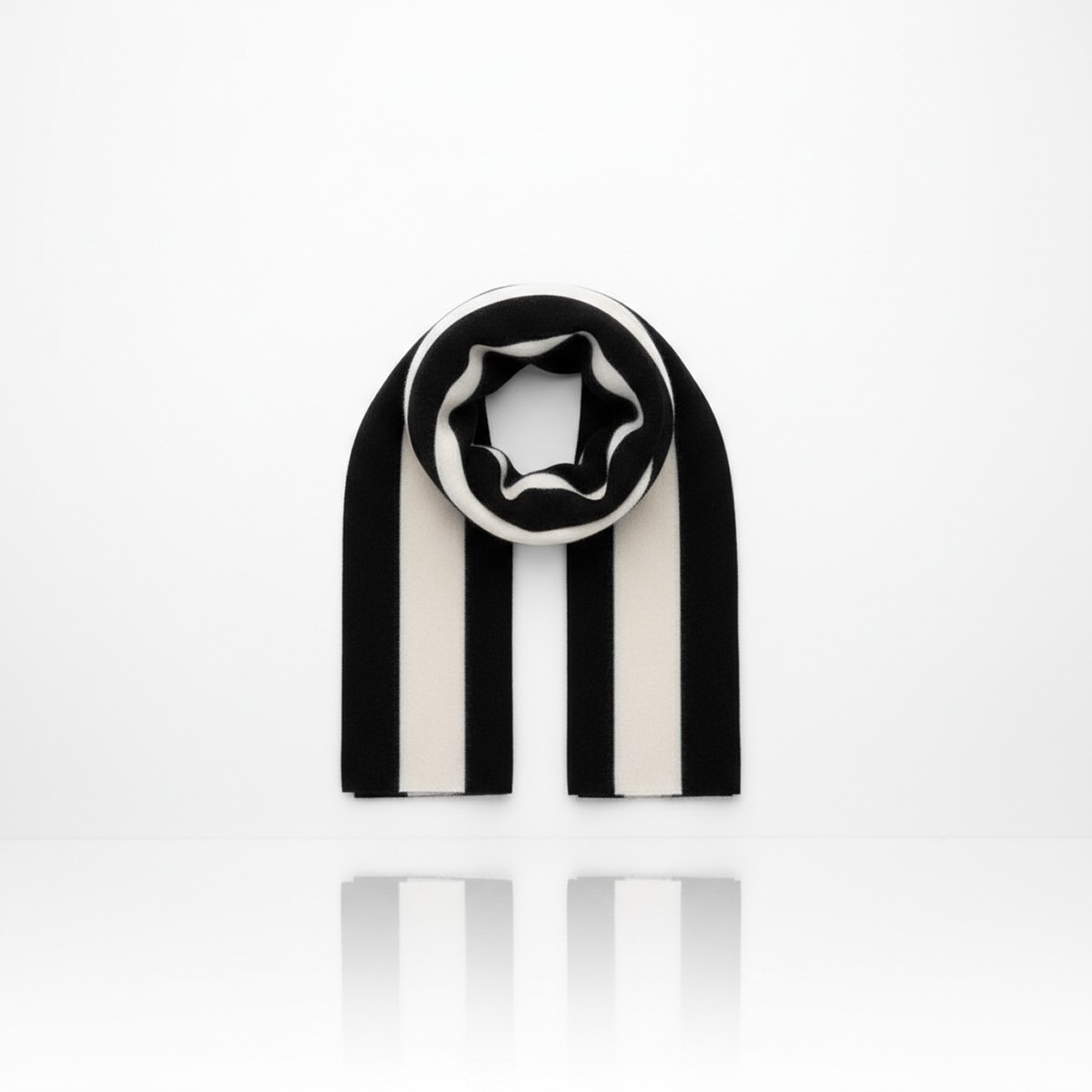
Prompt 6: Minimalist Capsule Wardrobe
When to use: Capsule wardrobe marketing, minimalist brands, outfit coordination content, versatility demonstrations
Styling notes: Clean surfaces emphasize quality, organized arrangement suggests thoughtful style, neutral palette
Emotional driver: Simplicity, intentional living, quality over quantity, mindful fashion
Prompt 7: Seasonal Collection Showcase
When to use: Seasonal launches, holiday marketing, trend-responsive collections, limited edition releases
Styling notes: Seasonal props create urgency and relevance, color palettes match season, evokes seasonal emotions
Emotional driver: Timeliness, seasonal excitement, trend participation, festive anticipation
Prompt 8: Travel and Adventure Wardrobe
When to use: Travel collections, versatile pieces, adventure-ready clothing, lifestyle brand storytelling
Styling notes: Travel elements create aspirational context, practical yet stylish combinations, compact versatile pieces
Emotional driver: Adventure, freedom, exploration, sophisticated traveler lifestyle
Prompt 9: Color Story Collection
When to use: Color-focused collections, trend color launches, artistic brand positioning, visual impact content
Styling notes: Arrangement creates visual journey, demonstrates color coordination, appeals to color-conscious buyers
Emotional driver: Visual pleasure, creative expression, color psychology, artistic fashion appreciation
Prompt 10: Work-to-Weekend Versatility
When to use: Versatile pieces, working professional targeting, transition garments, value-per-wear messaging
Styling notes: Layout shows transformation, demonstrates investment value, appeals to busy professionals
Emotional driver: Efficiency, versatility, smart investment, modern professional life balance
3. Editorial Fashion Artistry (5 Prompts)
Why editorial for fashion: Builds brand prestige, creates magazine-worthy content, differentiates brand aesthetic, attracts fashion-forward customers, generates shareable content.
Prompt 11: High Fashion Avant-Garde
When to use: Designer collections, fashion-forward pieces, editorial placements, luxury brand positioning, artistic differentiation
Styling notes: Bold artistic choices, unconventional compositions, fashion as art statement
Emotional driver: Artistic appreciation, fashion-forward identity, cultural sophistication, trendsetter status
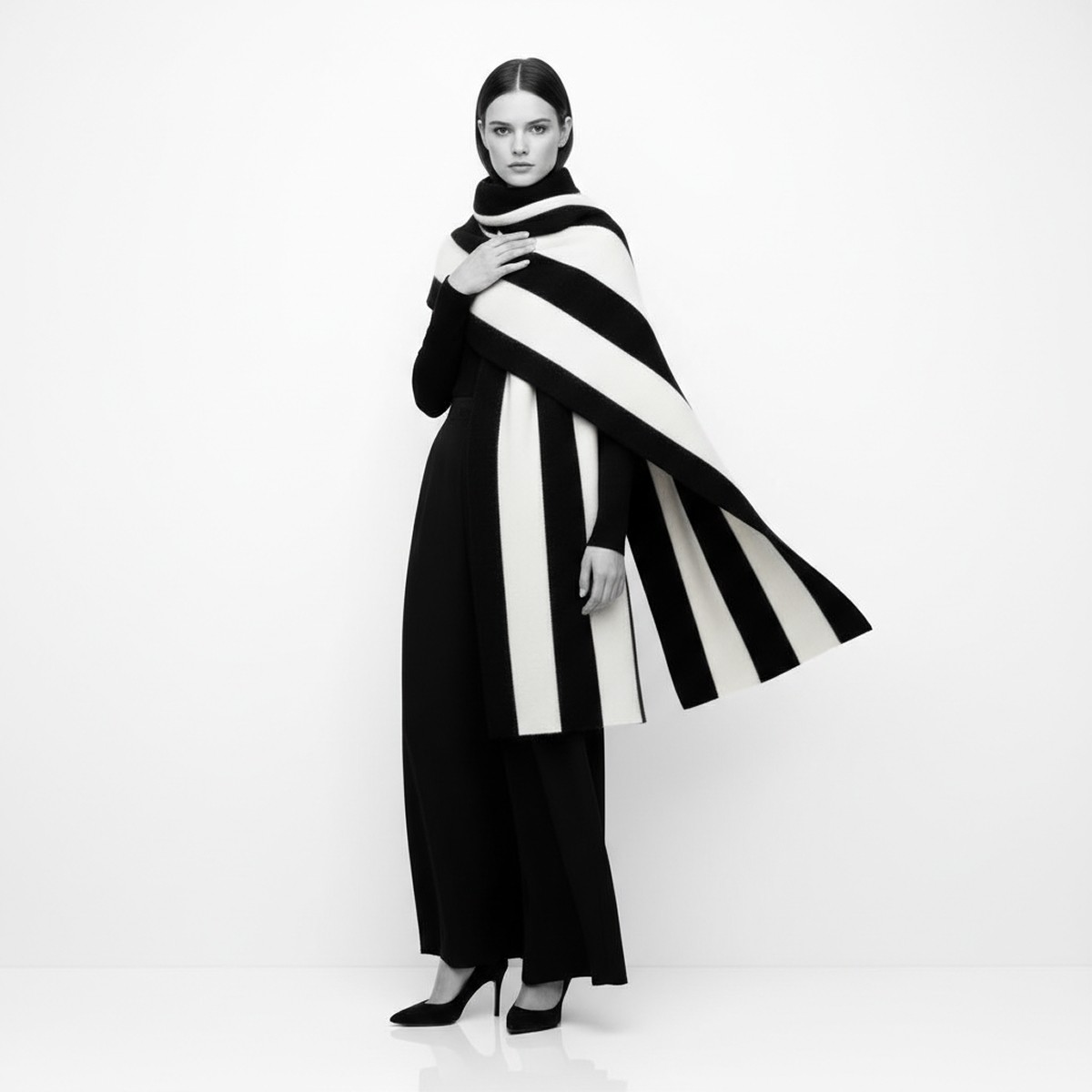
Prompt 12: Black and White Timeless
When to use: Timeless pieces, classic collections, artistic brand positioning, heritage marketing, sophisticated editorial content
Styling notes: Black and white emphasizes form and quality, timeless aesthetic transcends trends
Emotional driver: Timeless elegance, classic sophistication, enduring style, artistic appreciation
Prompt 13: Natural Light Editorial
When to use: Sustainable fashion, natural fibers, bohemian collections, romantic pieces, nature-inspired brands
Styling notes: Natural settings emphasize organic aesthetic, soft lighting creates dream-like quality
Emotional driver: Natural beauty, environmental harmony, free spirit, romantic escapism
Prompt 14: Architectural Fashion
When to use: Structured garments, contemporary collections, modern brand positioning, geometric designs, urban fashion
Styling notes: Architecture creates visual interest and modernity, geometric compositions, strong lines
Emotional driver: Contemporary sophistication, urban modernity, structural beauty, design appreciation
Prompt 15: Movement and Energy Editorial
When to use: Active wear, flowing garments, energetic brand identity, dynamic collections, motion-focused designs
Styling notes: Captures peak motion moment, demonstrates fabric behavior, creates visual excitement
Emotional driver: Energy, vitality, dynamic lifestyle, powerful confidence, freedom of movement
4. Lifestyle Fashion Storytelling (5 Prompts)
Why lifestyle for fashion: Creates brand narrative, shows clothing in aspirational contexts, builds emotional connection, demonstrates real-life integration, differentiates through storytelling.
Prompt 16: Morning Ritual Intimacy
When to use: Loungewear, comfortable fashion, self-care marketing, morning collections, intimate brand storytelling
Styling notes: Soft morning light creates warmth, authentic moments feel personal, comfortable natural styling
Emotional driver: Self-care, personal rituals, comfort, quiet luxury, mindful mornings
Prompt 17: Social Connection Moments
When to use: Social occasion wear, going-out collections, friendship marketing, connection-focused brands
Styling notes: Authentic social interactions create relatability, warm lighting suggests joy, candid moments
Emotional driver: Belonging, friendship, social confidence, shared joy, meaningful connections
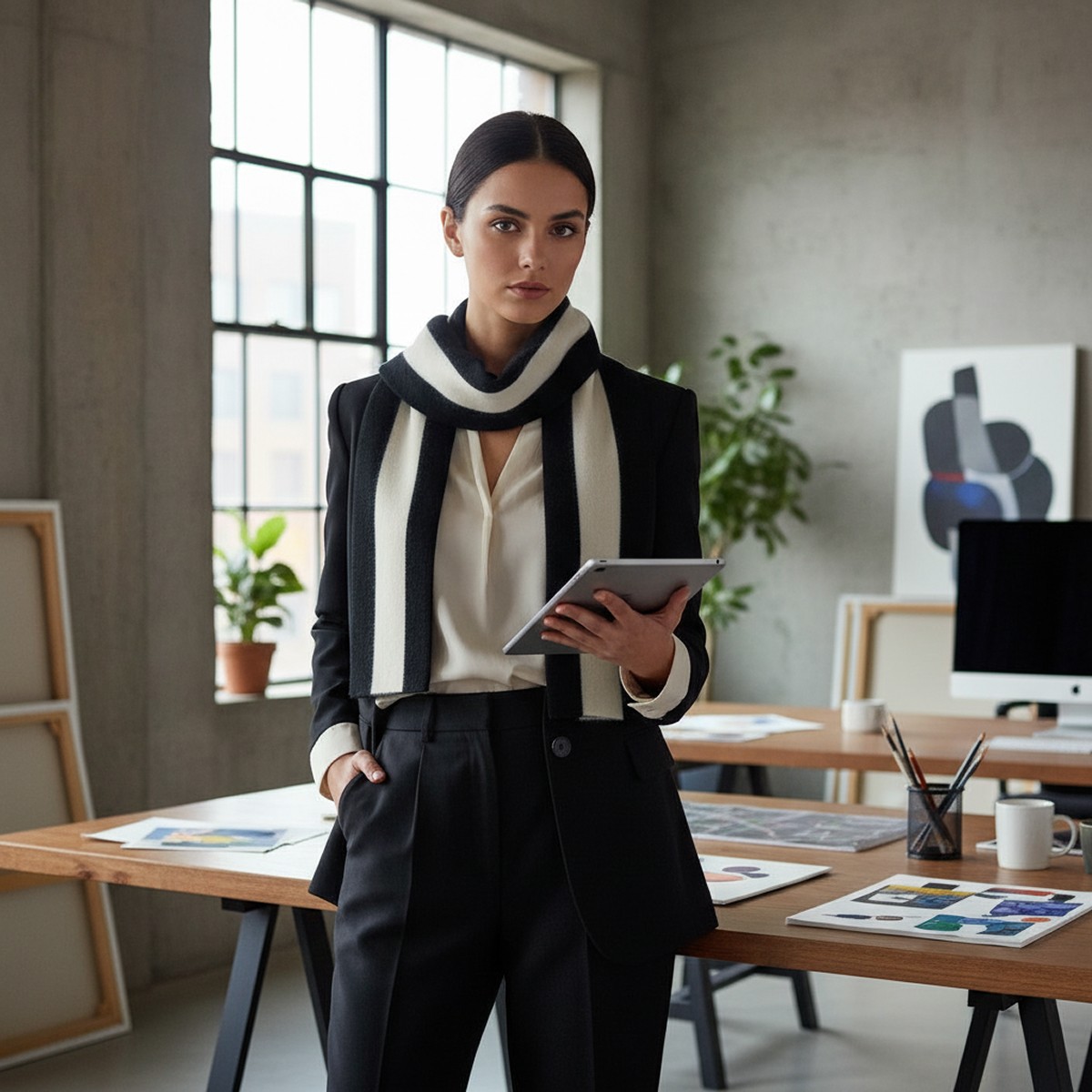
Prompt 18: Creative Professional Life
When to use: Work wear, professional fashion, creative industry targeting, career-focused collections
Styling notes: Modern workspace settings reflect target audience, professional yet creative styling balance
Emotional driver: Professional confidence, creative identity, career success, modern work-life integration
Prompt 19: Outdoor Adventure Spirit
When to use: Outdoor wear, adventure fashion, sustainable brands, active lifestyle collections, explorer marketing
Styling notes: Nature settings create aspiration, golden hour lighting adds magic, active but styled poses
Emotional driver: Adventure spirit, nature connection, freedom, exploration, authentic experiences
Prompt 20: Evening Culture and Arts
When to use: Evening wear, sophisticated fashion, cultural lifestyle marketing, special occasion collections
Styling notes: Cultural venues elevate brand positioning, sophisticated lighting and styling, refined elegance
Emotional driver: Cultural sophistication, refined taste, special occasions, elevated lifestyle experiences
Common Fashion Photography Issues & Solutions
Issue 1: Unrealistic Fabric Drape or Stiffness
AI sometimes generates clothing that appears too stiff or drapes unnaturally.
Solution:
Always specify fabric type: "flowing silk" or "structured denim" or "soft knit"
Include "natural fabric drape" or "realistic textile behavior"
For movement shots, add "fabric captured mid-movement"
Use "professional fashion photography" to trigger proper garment rendering
Issue 2: Inaccurate Fit or Proportions
Clothing appearing too tight, too loose, or with odd proportions.
Solution:
Specify fit type: "relaxed fit" or "tailored fit" or "oversized silhouette"
Include "natural body proportions" and "realistic garment fit"
Add "professional fit model proportions" for standard sizing
For specific body types, specify "petite/plus-size/tall fit"
Issue 3: Lost Fabric Texture Details
Materials like knitwear, denim, or textured fabrics appearing flat or smooth.
Solution:
Specify exact material: "chunky cable knit" or "raw denim" or "bouclé texture"
Include "extreme detail of fabric texture and weave"
Add "professional macro detail of material"
Use "8K resolution" to ensure texture rendering
Issue 4: Inconsistent Model Aesthetics Across Lookbook
Different AI-generated models creating disjointed brand presentation.
Solution:
Generate your first hero image with ideal model aesthetic
Use that image as reference for entire collection
Maintain identical "model type" descriptions across all prompts
Specify consistent styling: "same model aesthetic" or "consistent brand look"
Issue 5: Unnatural Poses or Awkward Body Positions
Models appearing stiff, awkward, or in unnatural positions.
Solution:
Specify natural pose types: "relaxed confident pose" or "casual natural stance"
Include "professional fashion model posing"
For lifestyle shots, add "candid authentic moment" or "natural gesture"
Avoid overly specific pose descriptions that might create awkwardness
How to Get the Best Results for Fashion
When using these fashion photography prompts, remember to:
✓ Always include a reference image of your clothing item (even basic photos work)
✓ Be specific about fabric and fit: "flowing silk midi dress" not just "dress"
✓ Match prompt category to marketing goal: On-model for fit clarity, lifestyle for aspiration
✓ Generate multiple variations and select most emotionally compelling and accurate
✓ Maintain consistent brand aesthetic across entire collection for professional cohesion
Common mistakes to avoid:
❌ Using only one photography style (vary between on-model/flat lay/editorial/lifestyle)
❌ Omitting fabric type and fit details
❌ Neglecting lifestyle storytelling for emotional connection
❌ Inconsistent model aesthetics across lookbook
❌ Forgetting to specify "extreme detail" and "8K resolution"
For Lucy+ members, our recommended tools for implementing these prompts are Nano Banana (completely FREE), Seedream ($9.99/mo), and Midjourney ($30/mo) - [SPECIAL IMPLEMENTATION GUIDE FOR MEMBERS]. We provide detailed guidance on which tool to use for each prompt category and fashion type. Nano Banana consistently produces the highest quality results for the cost (free!), while Seedream offers best value for professional lookbooks, and Midjourney excels at editorial artistry - our guide shows exactly when to use each for maximum impact.
Implementation Strategies for Fashion Brands
To maximize the impact of AI-generated fashion photography on your business, consider these strategic approaches:
Lookbook Sequence Strategy
For most fashion collections, we recommend this image sequence per piece:
On-model hero shot (shows fit and establishes primary view)
Detail/texture close-up (builds quality confidence)
Styled flat lay (demonstrates outfit versatility)
Lifestyle context (creates emotional connection and aspiration)
Editorial or alternative angle (adds depth and interest)
This sequence builds from practical (fit) → quality → versatility → emotion → artistry.
Seasonal Collection Launch Approach
For launching new seasonal collections:
Week 1: Generate all on-model hero shots (establishes collection at a glance)
Week 2: Create flat lay styling content (shows outfit combinations and versatility)
Week 3: Develop lifestyle storytelling (creates emotional marketing assets)
Week 4: Produce editorial artistry (generates shareable prestige content)
This staged approach builds comprehensive visual library while testing market response.
Platform-Specific Optimization
For Instagram/Social Media:
Lead with lifestyle storytelling and flat lay (scroll-stopping visual interest)
Use editorial artistry for "feed aesthetic" and brand positioning
On-model shots in Stories for shopping tags
Mix all styles for dynamic engaging feed
For E-commerce Product Pages:
Lead with on-model hero shot (immediate fit clarity)
Follow with flat lay styling (shows versatility)
Include detail shots (fabric texture and quality)
Add lifestyle if budget/time allows (emotional trigger)
For Email Marketing:
Use lifestyle storytelling for campaign hero images (emotional hooks)
Include on-model for "shop the look" sections
Flat lay for styling tips and outfit inspiration
Editorial for brand prestige and special announcements
Sales Impact & ROI
Our analysis of fashion brands implementing AI photography shows:
Conversion & Brand Improvements
✓ Conversion rates increased 40-45% compared to basic product photos
✓ Average order value increased 32% with styled outfit presentations
✓ Return rates decreased 50% due to accurate fit visualization
✓ Brand perception scores improved 55% with editorial-quality imagery
✓ Email click-through rates increased 48% with lifestyle storytelling
✓ Social media engagement increased 75% with varied photography styles
✓ Customer lifetime value increased 28% through stronger brand connection
Cost & Efficiency Advantages
✓ Average production savings of $8,000-16,000 per seasonal collection
✓ Creation time reduced from 3-4 weeks to under 2 days
✓ Model, styling, and location costs eliminated
✓ New collection launch time decreased 80%
✓ Ability to test multiple styling approaches without additional costs
✓ Social media content production 5x faster and cheaper
The most successful fashion brands implement a comprehensive photography strategy using all four categories (on-model, flat lay, editorial, lifestyle), creating an emotional journey from practical understanding to aspirational desire to brand loyalty.
Read Also
E-commerce Product Photography with AI: Save $10K+ on Shopify Photos
Complete Jewelry Photography Tutorial: Save $5K on Luxury Images
Top Seedream Prompts 2026: 50+ Professional Image Examples
FAQ
How do I ensure clothing looks realistic and not AI-generated?
The key is being highly specific about fabric and fit in your prompts. Always include: 1) Exact fabric type ("flowing silk charmeuse" not just "silk"), 2) Fit description ("relaxed tailored fit" not generic "fit"), 3) "Natural fabric drape" or "realistic textile behavior" to trigger proper garment physics, 4) "Professional fashion photography" which references high-quality fashion imaging standards, and 5) "Extreme detail of fabric texture and weave" for material authenticity. Our on-model prompts (Prompts #1-5) are specifically optimized for realistic garment rendering. Lucy+ members receive our fabric rendering guide with 25 material-specific modifiers that enhance realism for every fabric type from silk to denim.
Which prompt category should I use for showing how clothes actually fit?
For demonstrating fit and reducing return rates, prioritize on-model prompts (Prompts #1-5), specifically: 1) Prompt #1 (Classic Lookbook Portrait) for straightforward fit demonstration with clear body proportions, 2) Prompt #2 (Movement and Flow) to show how garment moves with natural body motion, and 3) Prompt #5 (Casual Lifestyle Authenticity) for relatable everyday fit context. For best results, combine: start with Prompt #1 for primary fit clarity, add Prompt #2 to show fabric behavior and drape, then include Prompt #5 for lifestyle relatability. This three-image sequence reduces fit-related returns by up to 60%. Lucy+ members receive our fit photography playbook with prompt sequences optimized for different garment categories (dresses, pants, outerwear, etc.).
Can AI create different model types (plus-size, petite, diverse) for inclusive fashion marketing?
Absolutely! The key is being specific in your prompt modifiers. For body-inclusive imagery, add these specifications: "plus-size model" or "petite proportions" or "tall model," combined with "realistic body diversity" and "authentic representation." For skin tone diversity, specify "diverse model representation" or specific descriptors. For age diversity, add "mature model" or "Gen-Z model aesthetic." The [Reference image] approach means you can also provide reference photos of your actual target customer demographic. Lucy+ members receive our inclusive fashion photography guide with 15 body-type and demographic modifiers, plus case studies from brands that increased conversions 35% by matching model diversity to their actual customer base.
How do I maintain consistent brand aesthetic across my entire fashion collection?
Create a "brand template prompt" approach: 1) Generate your first collection hero image that perfectly captures your brand aesthetic, 2) Save that exact prompt with all background, lighting, and styling parameters as your master template, 3) For each new piece, only change the garment-specific details while keeping aesthetic descriptors identical, 4) Always reference your hero image when generating new collection pieces. For example, if your brand is "minimalist contemporary," use "minimalist contemporary aesthetic" + "clean neutral background" + "soft even lighting" consistently across all pieces, changing only "[Reference image]" and garment descriptions. Lucy+ members receive brand aesthetic templates for 10 fashion categories (minimalist, bohemian, streetwear, luxury, sustainable, etc.) with pre-written prompt frameworks.
What's the difference between using flat lay vs. lifestyle prompts for fashion, and when should I use each?
Flat lay prompts (Prompts #6-10) showcase outfit combinations, styling versatility, and organization - perfect for demonstrating how pieces work together and inspiring outfit creation. Use flat lay when: showing capsule wardrobes, demonstrating seasonal collections, creating social media content, or marketing styling versatility. Lifestyle prompts (Prompts #16-20) create emotional connection by showing clothing in aspirational life contexts. Use lifestyle when: building brand narrative, targeting emotional purchases, creating campaign hero images, or differentiating through storytelling. Best practice: Use both strategically! Flat lay drives practical styling inspiration and outfit building, while lifestyle creates aspirational desire and brand connection. Lucy+ members receive our prompt pairing guide showing which combinations maximize conversions for different fashion categories and customer psychographics.
Ready to Transform Your Fashion Brand with Photography That Sells Style and Story?
Upgrade to Lucy+ to unlock our complete guide including:
✓ The specific FREE tool we recommend (captures fabric drape and fit perfectly)
✓ Step-by-step tutorials for each garment type (dresses, pants, outerwear, accessories)
✓ 15 additional specialized prompts for specific styles (sustainable, streetwear, vintage, athletic)
✓ Our exclusive fashion photography checklist ensuring every image drives conversions
✓ Before/after case studies from real fashion brands that increased sales by 45%+
✓ Seasonal campaign templates with ready-to-use prompt sequences
✓ Fabric and fit modifier library for photorealistic garment rendering
✓ Model diversity guide for inclusive fashion marketing
Conclusion
AI-generated fashion photography has revolutionized how successful fashion brands showcase their collections and build brand identity. Using these 20 expertly crafted prompts across four strategic categories (on-model, flat lay, editorial, lifestyle), you can create comprehensive visual narratives that demonstrate fit, inspire styling, and create emotional brand connections - all at a fraction of traditional photoshoot costs.
Remember that the specific implementation tool matters significantly. Our recommended free solution Nano Banana (revealed to Lucy+ members with full implementation guide) provides exceptional results at zero cost, while Seedream offers best value for professional quality, and Midjourney excels at editorial artistry - the three-tool strategy that makes fashion photography accessible at every budget level while maintaining professional quality.
www.topfreeprompts.com
Access 80,000+ prompts including professional fashion photography templates. Create exceptional lookbook visuals that sell style and build brand identity.