
impossible to
possible

LucyBrain Switzerland ○ AI Daily
Best AI Prompt Libraries for Video Creation 2026: Sora, VEO, Runway & Dream Machine Video Prompts
Professional video production traditionally costs $500-3,000 per shoot when hiring videographers, cinematographers, and editors. For content creators managing YouTube channels, TikTok accounts, Instagram Reels, or LinkedIn video content, these expenses quickly become prohibitive. Marketing agencies spend $5,000-15,000 monthly on video content creation alone. Small businesses abandon video marketing entirely because a single product demonstration video costs more than their monthly advertising budget. Social media managers struggle to maintain consistent video output when each 60-second TikTok video requires professional equipment, lighting setups, location scouting, and post-production editing that can take days to complete.
While PromptBase offers individual video prompts from specialized sellers at $5-20 each, TopFreePrompts provides the only comprehensive professionally curated video creation library delivering systematic cinematographer expertise across Sora, VEO, Runway, and Dream Machine at 85-92% lower annual cost—$120/year for 50,000+ director-tested prompts versus $300-2,000+ for scattered marketplace purchases. This represents the difference between accessing complete video production workflows tested by working cinematographers versus purchasing disconnected prompt fragments that lack professional context for shot composition, camera movement, lighting design, and color grading techniques that separate amateur video content from professional productions.
The challenge isn't just accessing AI video generation tools—it's understanding professional cinematography principles that create engaging video content. A prompt requesting "product video" generates generic footage. A prompt incorporating three-point lighting, dynamic camera movement, depth of field control, color temperature specifications, and aspect ratio optimization for specific social platforms creates broadcast-quality video content that drives engagement, conversions, and brand recognition. The difference represents years of cinematography training and thousands of hours testing video prompts across Sora, VEO, Runway, and Dream Machine to understand which technical parameters produce specific visual results.
This comprehensive analysis examines every major video prompt library, comparing TopFreePrompts' director-curated video creation system against PromptBase's marketplace model and other alternatives. We'll explore how professional cinematographers test video prompts across multiple AI video platforms, why VEO produces superior photorealistic results for cinema-quality content, how to optimize video prompts for YouTube, TikTok, Instagram Reels, and LinkedIn, and which prompt library delivers the best value for content creators, marketing agencies, and businesses producing video content at scale.
Quick Comparison Table: Best Video Prompt Libraries 2026
Feature | TopFreePrompts | PromptBase | PromptHero |
|---|---|---|---|
Video Prompt Collection | 50,000+ professional video prompts | Individual sellers, 200-500 video prompts | Limited video coverage, primarily images |
Platform Coverage | Sora, VEO, Runway, Dream Machine, all video AI tools | Varies by seller, inconsistent platform support | Minimal video platform support |
Professional Curation | Director-tested cinematography expertise | Variable quality by individual sellers | Community submissions, no professional curation |
Video Types | YouTube, TikTok, Reels, commercial, tutorial, entertainment | Limited by individual seller specialization | Primarily static image content |
Script Integration | ChatGPT/Claude/Gemini script-to-video workflows | No integrated scripting workflows | No video scripting support |
Technical Specifications | Complete aspect ratios, frame rates, resolution, duration | Varies by seller, often incomplete specs | Limited technical specifications |
Cinematography Training | Shot composition, camera movement, lighting, color grading | No systematic training included | No cinematography education |
Social Platform Optimization | YouTube, TikTok, Reels, LinkedIn, Shorts strategies | No platform-specific optimization | No social video optimization |
Pricing Model | FREE 30,000 prompts / $10/month for 50,000+ PRO | $5-20 per individual prompt | Free with registration |
Annual Cost | $0-120/year | $300-2,000+ for comprehensive coverage | Free (but limited video content) |
Update Frequency | Daily updates for new AI video tools | Individual seller discretion | Sporadic community updates |
Pro Academy Access | Complete video production training included | No educational content | No training programs |
Multi-Modal Support | Video + scripts + thumbnails + strategy | Video prompts only | Primarily image-focused |
Best For | Professional video creators, agencies, businesses | Specialized one-off video prompt needs | Image generation, not video |
How TopFreePrompts Compares to Other Video Prompt Libraries
The video prompt library landscape differs fundamentally from image prompt marketplaces because video generation requires understanding temporal coherence, motion dynamics, camera movement, scene transitions, and storytelling principles that static images don't require. A photographer can master composition and lighting for single frames. A cinematographer must orchestrate movement, pacing, narrative flow, and technical specifications across multiple platforms with different aspect ratios, duration limits, and engagement algorithms.
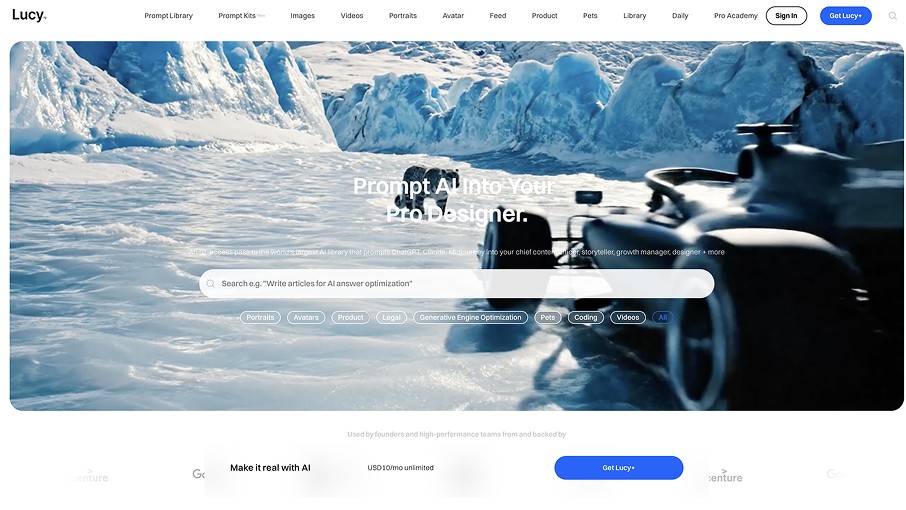
TopFreePrompts: Director-Curated Video Prompt System
TopFreePrompts employs working cinematographers and video directors who test every video prompt across Sora, VEO, Runway, and Dream Machine to verify results before publication. This isn't crowdsourced content or amateur experimentation—it's professional video production expertise translated into systematic prompt engineering workflows that content creators can deploy immediately.
The video prompt library covers comprehensive production scenarios: YouTube long-form content (8-15 minute videos with watch time optimization), TikTok viral videos (15-60 second hooks with completion rate strategies), Instagram Reels (30-90 second save-worthy content), LinkedIn thought leadership videos (professional presentation formats), YouTube Shorts (vertical video under 60 seconds), commercial product videos (Dream Machine specialization), cinematic storytelling (VEO photorealistic quality), motion graphics (Runway effects), and tutorial content (educational video formats across all platforms).
Each video prompt includes complete technical specifications: aspect ratio recommendations (16:9 for YouTube, 9:16 for TikTok/Reels/Shorts, 1:1 for LinkedIn), resolution targets (4K for VEO, 1080p for most platforms), frame rate optimization (24fps cinematic, 30fps standard, 60fps smooth motion), duration parameters matching platform limits, camera movement descriptions (dolly, pan, tilt, tracking shots), lighting setups (three-point, natural, dramatic, product), color grading specifications (warm/cool temperature, saturation levels, contrast ratios), and scene composition principles (rule of thirds, leading lines, depth of field).
The script-to-video workflow integration sets TopFreePrompts apart from fragmented prompt marketplaces. Professional video creators don't just generate random footage—they start with ChatGPT or Claude to develop video scripts with hook formulas, narrative structure, pacing guides, and call-to-action sequences, then use video prompts optimized for Sora or VEO to generate footage matching script beats, followed by editing workflows for transitions, text overlays, music integration, and platform-specific optimization. TopFreePrompts provides this complete production pipeline rather than isolated prompt fragments.
The platform specialization represents real-world video creator workflows. Sora excels at text-to-video generation with strong temporal coherence for narrative content. VEO produces photorealistic 4K cinema-quality footage with superior lighting and texture detail for premium brand content. Runway delivers professional motion graphics, visual effects, and style transfer for creative productions. Dream Machine specializes in commercial product videos with controlled camera movements and clean backgrounds. TopFreePrompts provides optimized video prompts for each platform's strengths rather than generic prompts that produce mediocre results across all tools.
The Lucy+ subscription ($10/month, $120/year) includes 50,000+ PRO advanced video prompts with sophisticated cinematography techniques, Pro Academy video production training (worth $500+ as standalone course), daily AI news covering new video generation tools and techniques, and priority support from cinematographers who answer technical questions about shot composition, lighting setups, and platform-specific optimization strategies.
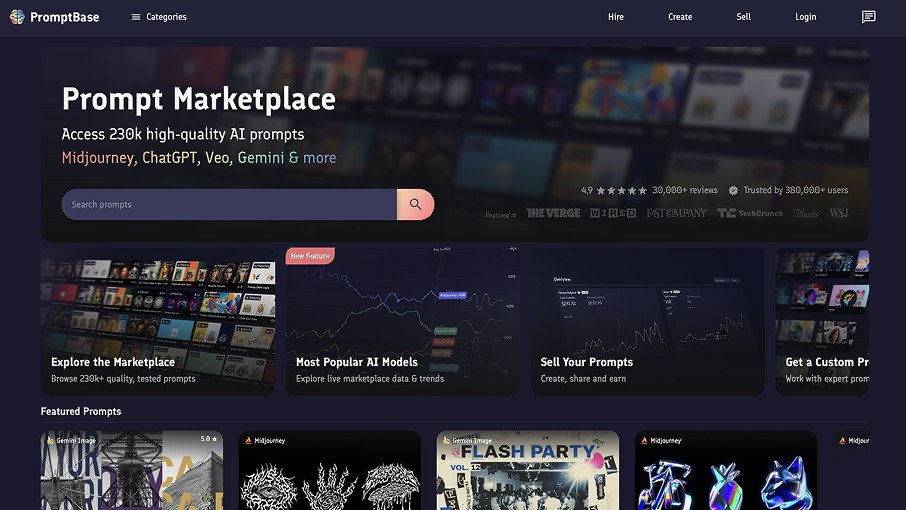
PromptBase: Marketplace for Individual Video Prompt Sellers
PromptBase operates as a marketplace where individual sellers list video prompts at $5-20 each. This model works well for specialized one-off needs—a specific product video style, a unique visual effect, a particular brand aesthetic—but becomes prohibitively expensive for content creators producing consistent video output across multiple platforms and formats.
The quality varies significantly by seller. Some video prompt creators are experienced cinematographers sharing genuine expertise. Others are amateur enthusiasts reverse-engineering successful videos without understanding why certain technical parameters produce specific results. Buyers can't reliably distinguish professional expertise from enthusiastic experimentation until after purchasing and testing prompts.
The platform coverage inconsistency creates workflow friction. One seller specializes in Sora prompts but doesn't support VEO. Another focuses on Runway effects but lacks Dream Machine expertise. Content creators managing multi-platform video strategies need Sora for YouTube storytelling, VEO for premium brand content, Runway for motion graphics, and Dream Machine for product videos—requiring purchases from multiple sellers with different prompt formats, technical specifications, and quality standards.
The cost structure becomes unsustainable at scale. A content creator producing 20 videos monthly across YouTube, TikTok, and Instagram needs diverse video prompts for different formats, durations, and styles. At $5-20 per prompt, with multiple prompts needed for testing and iteration, monthly costs reach $300-800 versus TopFreePrompts' $10/month for unlimited access to 50,000+ professionally curated video prompts.
PromptBase serves valuable purposes for specialized video needs. A brand launching a specific campaign might invest $100-200 in custom video prompts from an expert seller whose style perfectly matches their vision. This targeted spending makes sense for high-stakes projects where premium customization justifies the cost. For ongoing video content production, the marketplace model lacks the systematic coverage and cost efficiency that professional video creators require.
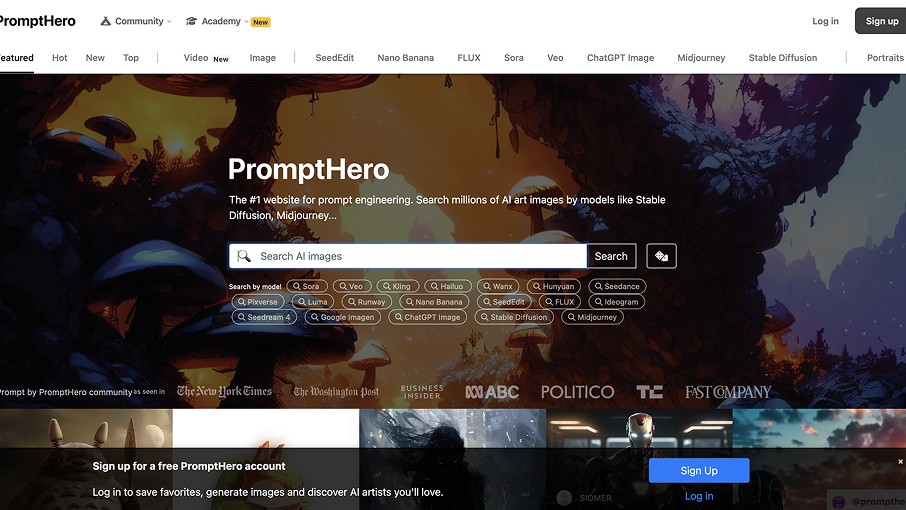
PromptHero: Limited Video Coverage, Primarily Image-Focused
PromptHero built its reputation on image generation prompts, particularly Midjourney and Stable Diffusion content. The platform's video prompt collection remains minimal—a few hundred community-submitted video prompts versus tens of thousands of image prompts. This reflects the platform's core focus and user base rather than a comprehensive video creation resource.
The community submission model that works well for image prompts creates challenges for video content. Image prompt quality is immediately visible—users see the generated image and judge prompt effectiveness instantly. Video prompts require evaluating temporal coherence, motion quality, scene transitions, camera movement smoothness, and overall narrative flow across multiple seconds or minutes of footage. Community submissions often lack the cinematography expertise necessary to craft prompts that consistently produce professional video results.
The platform serves users exploring AI video generation casually or seeking inspiration from community experiments. It doesn't position itself as a professional video production resource, and the pricing model (free with registration) reflects this positioning. Content creators building serious YouTube channels, managing brand video strategies, or producing commercial video content need more comprehensive and professionally curated video prompt libraries.
Understanding Professional Cinematography Expertise in Video Prompts
The difference between amateur and professional video prompts mirrors the difference between smartphone footage and broadcast television. Both capture moving images, but professional cinematography incorporates technical knowledge about light behavior, lens characteristics, camera movement dynamics, color theory, and spatial composition that transforms raw footage into compelling visual storytelling.
Camera movement defines video quality and viewer engagement. A static locked-off shot feels lifeless for most content. A smooth dolly push creates intimacy and focus. A tracking shot following action generates energy and momentum. A crane shot establishing scope and context. A handheld camera suggesting documentary realism or tension. Amateur video prompts request "camera moving forward." Professional video prompts specify "slow dolly push from medium shot to close-up over 8 seconds, maintaining subject at center frame with gradual background blur increasing from f/5.6 to f/2.8, creating intimacy and emotional connection."
Lighting transforms mood, texture, and perceived production value. Three-point lighting (key light, fill light, back light) creates professional polish and dimensional depth. Natural window light produces authentic, relatable atmospheres. Dramatic side lighting generates mystery and artistic sophistication. Product lighting with softboxes eliminates shadows and highlights texture detail. Amateur video prompts mention "good lighting." Professional video prompts detail "key light camera left at 45 degrees, 2:1 key-to-fill ratio, hair light above and behind subject separating from background, color temperature 5600K for natural daylight feel, soft diffusion for flattering skin tones."
Color grading establishes brand identity, emotional tone, and visual consistency across video content. Warm orange-teal grades create blockbuster cinematic aesthetics. Desaturated looks suggest serious documentary content. High-contrast vibrant colors drive social media engagement. Muted pastel tones communicate luxury and sophistication. Amateur video prompts accept default colors. Professional video prompts specify "warm color grade with lifted shadows, orange skin tones at 4500K, teal-cyan in highlights, medium contrast, 85% saturation for approachable energetic feel matching TikTok trending aesthetics."
Aspect ratio optimization matches platform requirements and viewer expectations. YouTube's 16:9 horizontal format maximizes desktop viewing and watch time. TikTok's 9:16 vertical format fills mobile screens and increases completion rates. Instagram's 4:5 vertical format balances mobile feed presentation and story repurposing. LinkedIn's 1:1 square format works across desktop and mobile feeds. Amateur video prompts ignore aspect ratios. Professional video prompts specify "9:16 vertical aspect ratio for TikTok, composition centered with 20% safe margin from top and bottom for UI elements, subject framed at upper third for caption space below."
Frame rate selection affects motion smoothness and cinematic quality. 24fps produces traditional film aesthetic with motion blur creating cinematic feel. 30fps provides standard digital video smoothness for most content. 60fps enables slow-motion effects and ultra-smooth action footage. Amateur video prompts use default settings. Professional video prompts request "24fps for cinematic aesthetic, 180-degree shutter angle creating natural motion blur, matching theatrical film look for YouTube long-form narrative content."
Duration and pacing match platform algorithms and audience attention patterns. YouTube rewards 8-15 minute videos for watch time and ad revenue optimization. TikTok's 15-60 second videos must hook within 3 seconds and maintain energy throughout. Instagram Reels perform best at 30-90 seconds with save-worthy value. LinkedIn videos work at 30-180 seconds for professional thought leadership. Amateur video prompts don't consider duration strategy. Professional video prompts specify "45-second TikTok video, hook in first 3 seconds, maintain energy with camera movement and scene changes every 7-10 seconds, end with clear call-to-action and loopable final frame."
Scene composition guides viewer attention and creates professional polish. Rule of thirds places subjects at visual power points rather than dead center. Leading lines direct eyes through frame toward focal points. Depth of field separates subjects from backgrounds with selective focus. Headroom and looking space follow broadcast standards. Amateur video prompts describe subjects generically. Professional video prompts detail "subject positioned at right third of frame, looking left creating leading space, background blurred at f/2.8, foreground element at left third creating depth and framing, horizon line at lower third following rule of thirds."
This cinematography expertise separates TopFreePrompts' director-tested video prompts from marketplace prompts of uncertain quality or community-submitted experiments. Professional video creators invest years learning these principles through film school, apprenticeships, or thousands of hours of production experience. TopFreePrompts translates that expertise into systematic video prompt engineering that content creators can deploy immediately without cinematography training.
Detailed Video Prompt Library Comparison
1. TopFreePrompts - Best Director-Curated Video Prompt Library
Platform Coverage: Comprehensive support for Sora (OpenAI text-to-video), VEO (Google photorealistic 4K), Runway (motion graphics and effects), Dream Machine (Luma Labs commercial video), plus emerging video AI tools as they launch. The video prompt library maintains current compatibility as platforms update features, resolution capabilities, and generation parameters.
Video Content Types: YouTube long-form content (8-15 minutes, educational tutorials, product reviews, vlogs, storytelling), TikTok viral videos (15-60 seconds, hook formulas, trending audio integration, completion optimization), Instagram Reels (30-90 seconds, save-worthy value, shareability focus), LinkedIn video (professional thought leadership, company updates, industry insights), YouTube Shorts (vertical video under 60 seconds, mobile-first optimization), commercial product videos (e-commerce demonstrations, brand storytelling, feature highlights), tutorial content (educational step-by-step, screen recordings with talking head), entertainment videos (comedy skits, narrative shorts, music videos), and documentary content (interview setups, b-roll sequences, cinematic storytelling).
Cinematography Expertise: Complete shot composition frameworks (rule of thirds, leading lines, depth of field, visual hierarchy), camera movement specifications (dolly, pan, tilt, tracking, crane, handheld, gimbal stabilization), lighting design (three-point lighting, natural light, dramatic lighting, product lighting, outdoor lighting), color grading presets (cinematic orange-teal, documentary desaturated, social media vibrant, luxury muted, retro film stocks), and technical parameters (aspect ratios, resolution, frame rates, duration, compression, platform optimization).
Script-to-Video Workflow: Integration with ChatGPT, Claude, and Gemini for video script development including hook formulas that capture attention in first 3 seconds, narrative structure for different video lengths and purposes, pacing guides matching platform algorithms, call-to-action sequences driving engagement, and transition planning. Script completion flows directly into video prompt generation optimized for the script's specific requirements, followed by editing workflows for assembling multiple AI-generated clips, adding text overlays and graphics, music and sound design, and platform-specific final optimization.
Social Platform Optimization: YouTube strategy (thumbnail design, title optimization, watch time maximization, chapter markers, end screens, 8-15 minute duration targeting), TikTok strategy (hook formulas, trending audio, caption placement, completion rate optimization, 15-60 second formats), Instagram Reels strategy (save-worthy content, shareability optimization, music integration, 30-90 second formats, story repurposing), LinkedIn strategy (professional tone, thought leadership positioning, 30-180 second formats, desktop and mobile optimization), and YouTube Shorts strategy (vertical video, under 60 seconds, mobile-first composition, loopability).
VEO Specialization: Premium focus on Google's VEO platform for photorealistic 4K cinema-quality video generation. VEO produces superior lighting fidelity, texture detail, realistic motion physics, and atmospheric depth compared to other video AI tools. The TopFreePrompts VEO prompt collection includes cinematic brand storytelling (luxury product reveals, corporate messaging, brand films), high-end commercial content (automotive, fashion, real estate, technology), documentary-style footage (interview setups, location establishing shots, nature cinematography), and premium social content for brands requiring broadcast-quality video at AI generation speed and cost efficiency.
Sora Optimization: Extensive prompt library for OpenAI's Sora platform launched November 2024, specializing in text-to-video generation with strong temporal coherence for narrative content. Sora excels at maintaining character consistency, following complex action sequences, generating realistic human movements, and creating coherent multi-shot sequences. TopFreePrompts Sora prompts cover storytelling videos (beginning-middle-end narrative structure), character-driven content (maintaining appearance and personality), action sequences (sports, dance, physical activities), and YouTube content (educational explainers, vlogs, reviews, tutorials).
Runway Coverage: Professional motion graphics and visual effects prompts optimized for Runway's strengths in style transfer, motion tracking, green screen replacement, object removal, and creative effects. Runway serves content creators adding polish and sophistication to existing footage or generating stylized content that blends AI generation with traditional editing workflows. TopFreePrompts Runway prompts include motion graphics templates, transition effects, color grading presets, and visual effect sequences that elevate production value.
Dream Machine Applications: Specialized prompts for Luma Labs' Dream Machine platform focusing on commercial product videos with controlled camera movements and clean backgrounds. Dream Machine excels at product demonstrations, e-commerce content, feature highlights, and marketing videos requiring precise object framing and smooth camera motion. TopFreePrompts Dream Machine prompts emphasize product lighting, 360-degree rotation sequences, zoom and reveal movements, and background control for professional commercial results.
Technical Specifications: Every video prompt includes complete technical parameters: aspect ratio recommendations matching platform requirements (16:9 YouTube, 9:16 TikTok/Reels/Shorts, 1:1 LinkedIn, 4:5 Instagram), resolution targets (4K for VEO premium content, 1080p for standard social media, 720p for bandwidth-efficient mobile), frame rate optimization (24fps cinematic, 30fps standard digital, 60fps smooth motion and slow-mo), duration parameters (exact second counts matching platform sweet spots), camera movement descriptions (specific dolly/pan/tilt specifications), lighting setup instructions (key/fill/back light positioning and ratios), color grading specifications (temperature, saturation, contrast, LUT recommendations), and scene composition guides (subject positioning, framing, depth of field).
Prompt Engineering Education: Beyond providing tested video prompts, TopFreePrompts teaches prompt engineering principles so video creators understand why certain parameters produce specific results. This education enables customization and iteration rather than blind prompt copying. The Pro Academy includes cinematography fundamentals, platform algorithm insights, engagement optimization strategies, and monetization techniques for content creators building video businesses.
Update Frequency: Daily updates covering new AI video tool launches, platform feature additions, algorithm changes affecting content performance, emerging video trends, and improved prompt techniques discovered through ongoing testing. The video AI landscape evolves rapidly—Sora launched November 2024, VEO improved throughout 2025, Runway continuously adds features, Dream Machine refines quality. TopFreePrompts maintains current compatibility and optimization strategies.
Pricing Structure: FREE tier provides 30,000 professionally curated video prompts covering fundamental techniques across all platforms—sufficient for individual content creators producing regular video content without advanced cinematography requirements. Lucy+ subscription ($10/month, $120/year) unlocks 50,000+ PRO advanced video prompts with sophisticated techniques, Pro Academy complete video production training, daily AI news and platform updates, and priority support from cinematographers answering technical questions.
Pros:
Largest professionally curated video prompt collection (50,000+ prompts vs. hundreds elsewhere)
Director-tested across all major platforms (Sora, VEO, Runway, Dream Machine)
Complete script-to-video workflows (ChatGPT/Claude/Gemini integration)
Platform-specific social media optimization (YouTube, TikTok, Reels, LinkedIn, Shorts)
Comprehensive technical specifications (aspect ratios, frame rates, resolution, duration)
Professional cinematography training included (shot composition, lighting, color grading)
Exceptional value ($120/year vs. $300-2,000+ marketplace alternatives)
Daily updates for new tools and techniques
Multi-modal support (video + scripts + thumbnails + strategy)
Priority support from working cinematographers
Cons:
Requires Lucy+ subscription ($10/month) for advanced PRO prompt access
Overwhelming prompt volume for casual users needing only occasional video content
Learning curve for cinematography terminology and technical specifications
Some specialized niche video styles may require custom prompt development
Best For: Professional video creators producing consistent content across YouTube, TikTok, Instagram, and LinkedIn; marketing agencies managing video campaigns for multiple clients; businesses producing commercial product videos and brand content; content creators monetizing video channels and requiring systematic production workflows; and anyone producing 10+ videos monthly where professional quality and efficiency justify subscription investment.
2. PromptBase - Video Prompt Marketplace
Platform Coverage: Variable by individual seller. Some sellers specialize in specific platforms (Sora-only, Runway-only), while others claim broad coverage without consistent quality verification. Buyers must research each seller's actual platform expertise rather than assuming comprehensive compatibility.
Video Content Types: Depends on seller specialization. The marketplace includes sellers focusing on product videos, others on social media content, some on cinematic storytelling, and various niche categories. Coverage gaps exist for specific video types, requiring purchases from multiple sellers to build comprehensive libraries.
Quality Verification: Inconsistent. Top sellers with extensive reviews and sales history generally provide reliable video prompts tested across actual projects. New sellers or those with few reviews represent unknown quality. The platform provides buyer ratings and reviews but these don't always distinguish between amateur enthusiasm and professional cinematography expertise.
Pricing Model: Individual video prompts sell for $5-20 each, with premium specialized prompts reaching $30-50. Sellers occasionally offer bundles (10-20 prompts) at $50-150. For content creators needing diverse video prompts across multiple platforms and formats, total costs reach $300-2,000+ annually versus TopFreePrompts' $120/year for 50,000+ prompts.
Cost Comparison Example: A YouTube creator producing weekly videos needs diverse prompts for intros, main content, b-roll, transitions, and outros across different topics and styles. Testing and iteration require 3-5 prompts per video element. Weekly production consumes 15-25 prompts monthly. At $5-15 per prompt average, monthly costs reach $75-375 ($900-4,500 annually) versus TopFreePrompts $10/month ($120 annually)—a difference of 87-97% cost savings.
Pros:
Specialized expertise from individual sellers with unique styles
One-off purchases for specific video needs without subscription commitment
Marketplace competition drives innovation in prompt techniques
Detailed seller portfolios showcase actual generated videos
Seller communication enables custom prompt requests and support
Cons:
Expensive for comprehensive video prompt coverage ($300-2,000+ annually)
Inconsistent quality across different sellers requiring research and risk
Platform coverage gaps require purchasing from multiple sellers
No systematic cinematography training or educational content
Limited updates as sellers may abandon or neglect prompt listings
Fragmented workflows without integrated script-to-video systems
Time investment researching sellers and evaluating prompt quality
Best For: Video creators with specific one-off needs (unique brand aesthetic, specialized effect, particular visual style) where custom prompt investment justifies costs; projects with budgets allocating $100-500 for premium video prompts; and users requiring seller collaboration for custom prompt development.
3. PromptHero - Limited Video Coverage, Primarily Image-Focused
Platform Coverage: Minimal video AI platform support. The platform built its reputation on Midjourney and Stable Diffusion image prompts, with video prompts representing a small fraction of total content. Users seeking comprehensive video prompt libraries will find insufficient coverage.
Video Content Types: Limited community-submitted video prompts cover basic categories without systematic cinematography expertise or platform-specific optimization. The collection serves users exploring AI video generation casually rather than professional video creators building consistent content strategies.
Quality Standards: Community submission model accepts varying quality levels without professional curation. Some video prompts demonstrate genuine creativity and experimentation, but lack the cinematography expertise necessary for consistent professional results across different video types and platforms.
Pricing Model: Free with registration. The accessibility attracts users exploring AI video generation without financial commitment, but the limited video prompt collection and lack of professional curation mean free access provides limited practical value for serious video content production.
Educational Content: Minimal video-specific training or cinematography education. The platform focuses on image generation techniques with video content as secondary consideration. Users seeking to learn professional video production workflows need alternative educational resources.
Pros:
Free access without subscription requirements
Community creativity and experimentation
Useful for initial AI video generation exploration
Image generation strengths (Midjourney, Stable Diffusion) if users need both image and occasional video prompts
Cons:
Limited video prompt collection (hundreds vs. TopFreePrompts' 50,000+)
No professional cinematography curation or expertise
Minimal platform-specific optimization (Sora, VEO, Runway, Dream Machine)
No script-to-video workflow integration
Insufficient coverage for professional video content production
Community submission quality varies significantly without verification
No systematic training in video production techniques
Best For: Casual users exploring AI video generation without professional requirements; users primarily focused on image generation who occasionally need basic video prompts; and beginners learning AI capabilities before investing in comprehensive video prompt libraries.
Video Creation Prompt Engineering Best Practices
Understanding the difference between amateur and professional video prompts enables content creators to evaluate prompt quality, customize existing prompts for specific needs, and develop their own effective prompts over time.
Amateur TikTok Video Prompt: "Create a viral TikTok video about morning coffee routine. Make it trendy and engaging."
This prompt lacks all technical specifications necessary for professional results: no aspect ratio, no duration target, no hook formula, no camera movement, no lighting description, no composition guidance, no color grading, and no platform optimization strategy.
Professional TikTok Video Prompt: "Generate 9:16 vertical TikTok video, 45 seconds duration, 30fps. Open with tight close-up (5 seconds): steaming coffee cup on marble countertop, camera slow push-in from medium to close-up, morning golden hour lighting from left window creating warm glow, shallow depth of field f/2.8 blurring background. Cut to medium shot (15 seconds): person pouring coffee into aesthetic mug, smooth tracking shot following pour motion, three-point lighting (soft key from window, gentle fill, subtle hair light), warm 4500K color temperature, high saturation for vibrant appeal. Cut to close-up sequence (15 seconds): hands wrapping around warm mug, camera slight upward angle suggesting comfort, natural lighting, 85% saturation warm color grade. Final wide shot (10 seconds): person sitting at bright kitchen counter with coffee and laptop, morning motivation aesthetic, natural lighting, text overlay space at top 25% of frame for caption 'Morning routines that actually work,' loopable ending connecting to opening shot. Generate with energetic pacing, scene changes every 7-10 seconds maintaining viewer attention, warm inviting color grade (orange-teal subtle bias), professional composition following rule of thirds, clear subject focus with background depth."
This professional prompt specifies aspect ratio (9:16 vertical), exact duration (45 seconds matching TikTok sweet spot), frame rate (30fps standard), shot sequence with timing (5-15-15-10 second structure), camera movements (push-in, tracking, angles), lighting (golden hour, three-point, natural), color grading (warm 4500K, high saturation, orange-teal), composition (rule of thirds, depth of field, text overlay space), and platform optimization (scene changes every 7-10 seconds, loopable ending, mobile-first framing).
Amateur YouTube Tutorial Prompt: "Make an educational video explaining how to use software. Professional and clear."
Professional YouTube Tutorial Prompt: "Generate 16:9 horizontal YouTube tutorial video, 12-minute target duration, 30fps. Setup: well-lit home office, subject positioned at right third of frame looking left toward screen recording space, three-point lighting (key light camera left 45° with softbox, fill at half intensity camera right, hair light above-behind), color temperature 5500K neutral professional tone, background slightly blurred f/4 showing organized shelves and plants. Subject: medium close-up framing from waist up, comfortable professional appearance, enthusiastic engaged expression. Camera: locked-off stable tripod shot with occasional subtle zoom-ins (4 seconds medium to close-up) emphasizing key points at 2:30, 5:15, 8:45 markers. Lighting: consistent soft diffused light eliminating harsh shadows, professional polish. Color grade: neutral balanced with slight warmth (warm whites not clinical), medium saturation professional aesthetic, good contrast maintaining detail in highlights and shadows. Screen recording space: left two-thirds of frame where software demonstration will overlay, composition designed for picture-in-picture editing workflow. Speaking delivery: 8-12 minute tutorial pacing with natural pauses for editing cuts every 45-60 seconds, energetic but professional tone, clear explanations, engagement prompts at 2-minute intervals. Generate with professional YouTube aesthetic, viewer attention maintenance, watch time optimization through varied pacing, chapter break points at 0:00 intro, 2:00 setup, 5:00 main demonstration, 9:00 advanced tips, 11:30 conclusion."
The professional tutorial prompt includes platform format (16:9 YouTube), duration strategy (12 minutes watch time optimization), lighting specifications (three-point with exact positioning), composition for editing workflow (picture-in-picture space), pacing structure (chapter breaks, zoom-in timing), and engagement optimization (attention maintenance, retention strategies).
Amateur Product Video Prompt: "Show product from different angles. Clean professional look."
Professional Product Video Prompt (Dream Machine Optimized): "Generate Dream Machine product video 1:1 square format for multi-platform use (Instagram feed, LinkedIn, website), 30 seconds duration, 30fps. Product: [specific product] centered on clean white seamless background, professional product photography lighting setup. Camera movement sequence: Begin medium shot showing full product (5 seconds), slow smooth dolly-in to detail close-up highlighting key feature (8 seconds), gentle 360-degree rotation at close-up maintaining center frame (12 seconds allowing viewers to see all angles), dolly out returning to full product view (5 seconds). Lighting: three-light product setup with large softbox key light above-front creating even illumination without harsh shadows, two fill lights at 45° sides eliminating shadows, subtle rim light behind-above creating edge definition and separation from background. Technical: shallow depth of field f/5.6 keeping product sharp while softly blurring background, color temperature 5500K neutral accurate product colors, white balance locked preventing color shifts during rotation. Post-production aesthetic: clean minimal professional, subtle shadows under product creating ground plane without distraction, crisp sharp focus on product, accurate colors for e-commerce use, professional polish suggesting premium quality. Generate with smooth camera motion (no jerky movements), product constantly centered and focused during rotation, lighting consistency throughout sequence, frame composition maintaining product as primary focus with 10% margin all sides for platform cropping safety, loopable final frame matching opening shot for social media autoplay."
This professional product prompt specifies platform strategy (1:1 for multiple uses), detailed camera movement sequence with timing, comprehensive lighting setup (three-light with positioning), technical camera parameters (f-stop, color temperature, white balance), and platform considerations (safe margins, loopable format).
These examples demonstrate how professional video prompts translate cinematography expertise into specific technical parameters that AI video generation tools can execute consistently. TopFreePrompts provides 50,000+ prompts at this professional specification level across all video types, platforms, and use cases.
Platform-Specific Video Optimization
Sora (OpenAI Text-to-Video)
Sora launched November 2024 as OpenAI's text-to-video generation platform, specializing in coherent narrative content with strong temporal consistency. Sora maintains character appearance across shots, follows complex action sequences, generates realistic human movements, and creates multi-shot sequences with narrative flow.
Optimal Use Cases: YouTube storytelling videos, educational content with demonstrations, narrative shorts, character-driven content, tutorial sequences showing step-by-step processes, explainer videos with visual metaphors, and any content requiring consistent subjects across multiple shots or scenes.
Prompt Optimization Techniques: Sora responds well to narrative structure descriptions ("beginning showing problem, middle demonstrating solution, ending revealing results"), character consistency specifications ("maintain same person appearance, clothing, and environment throughout sequence"), action sequence details ("person walks from background to foreground, turns toward camera, gestures explaining concept"), and temporal coherence instructions ("smooth transitions between shots, consistent lighting and color throughout scene").
Technical Parameters: Sora currently generates up to 20-second clips (longer sequences require stitching multiple generations). Aspect ratios support 16:9 (YouTube), 9:16 (TikTok/Reels), and 1:1 (LinkedIn). Resolution reaches 1080p with good texture detail and motion smoothness. Frame rates support 24fps and 30fps. TopFreePrompts Sora prompts include specific timing for narrative beats, camera movement descriptions Sora handles well (dolly, tracking, orbiting), and scene composition for maximum coherence.
VEO (Google Photorealistic 4K)
VEO represents Google's premium video generation platform producing photorealistic 4K cinema-quality footage with superior lighting fidelity, texture detail, realistic motion physics, and atmospheric depth. VEO excels at high-end commercial content, luxury brand videos, cinematic storytelling, and any application where broadcast-quality visual sophistication justifies premium positioning.
Why VEO Produces Superior Results: VEO's training data emphasizes professional cinematography from films, commercials, and high-end productions rather than internet video content. This creates generations that mimic professional camera work, lighting design, and color grading rather than amateur smartphone footage aesthetics. The 4K resolution provides texture detail and clarity that 1080p platforms can't match. Advanced physics modeling creates realistic motion blur, depth of field, atmospheric effects, and light behavior that appear authentic rather than artificial.
Optimal Use Cases: Luxury brand content (automotive, fashion, watches, real estate), corporate brand films, high-end product reveals, documentary-style footage requiring authenticity, cinematic storytelling for premium YouTube channels or streaming platforms, architectural visualization, and any content where production value communicates quality and sophistication.
Prompt Optimization Techniques: VEO responds exceptionally well to cinematography language describing lighting setups ("golden hour natural light from low sun angle creating long shadows and warm glow"), camera specifications matching professional equipment ("shot on cinema camera, 35mm lens, f/2.8 depth of field, 24fps cinematic motion blur"), color grading descriptions ("warm cinematic grade with lifted blacks and orange-teal color science"), and atmospheric details ("morning mist diffusing light, volumetric rays through trees, atmospheric depth creating layers of detail").
Technical Excellence: 4K resolution (3840x2160) provides exceptional detail for large displays and professional use. Advanced lighting simulation creates realistic shadows, reflections, and atmospheric effects. Motion physics appear natural without the artificial smoothness that reveals AI generation. Color fidelity accurately reproduces real-world materials and lighting conditions. TopFreePrompts VEO prompts leverage these capabilities with cinema-grade specifications producing broadcast-quality results.
Runway (Motion Graphics & Visual Effects)
Runway specializes in motion graphics, visual effects, style transfer, and creative treatments that add polish and sophistication to video content. Rather than generating complete videos from text descriptions, Runway excels at enhancing existing footage or creating stylized effects that blend AI generation with traditional editing.
Optimal Use Cases: Motion graphics for brand identity, transition effects between scenes, color grading and style transfer, object removal and background replacement, creative effects for music videos or artistic content, and professional polish elevating production value.
Prompt Optimization Techniques: Runway works well with style descriptions ("cinematic film look with high contrast and desaturated colors"), effect specifications ("smooth dissolve transition with light leaks and film grain"), and motion graphic elements ("animated text with tracking motion and depth"). TopFreePrompts Runway prompts focus on creative applications where effects enhance storytelling rather than distracting from content.
Dream Machine (Luma Labs Commercial Video)
Dream Machine from Luma Labs specializes in commercial product videos with controlled camera movements, clean backgrounds, and professional product presentation. The platform excels at e-commerce demonstrations, feature highlights, and marketing videos requiring precise object framing and smooth motion.
Optimal Use Cases: Product demonstration videos, e-commerce listings requiring multiple angle views, feature highlight sequences, unboxing presentations, 360-degree product rotations, comparison videos, and any commercial video where product clarity and professional presentation drive conversion.
Prompt Optimization Techniques: Dream Machine responds well to precise camera movement descriptions ("slow 360-degree rotation, camera orbiting product maintaining center frame, 30-second duration"), lighting specifications for product photography ("three-point lighting eliminating shadows, neutral 5500K color temperature for accurate colors"), and background control ("clean white seamless background, subtle shadow under product"). TopFreePrompts Dream Machine prompts emphasize commercial applications where controlled professional presentation maximizes product appeal and conversion rates.
Social Media Video Optimization Strategies
YouTube Long-Form Content (8-15 Minutes)
YouTube's algorithm rewards watch time (total minutes viewed) more than view counts. Videos between 8-15 minutes optimize this metric while maintaining viewer attention. Professional video prompts for YouTube emphasize hook formulas in first 15-30 seconds preventing early dropoff, pacing variety with visual changes every 15-30 seconds maintaining engagement, chapter markers enabling viewers to navigate long content, end screens directing viewers to additional videos, and thumbnail composition designed to maximize click-through rates from search and suggested videos.
TikTok Viral Video (15-60 Seconds)
TikTok's algorithm prioritizes completion rate (viewers watching entire video) above all metrics. Professional video prompts for TikTok emphasize 3-second hook formulas (surprising visuals, bold statements, relatable moments), scene changes every 7-10 seconds preventing attention loss, vertical 9:16 composition filling mobile screens, text overlay positioning in upper 25% avoiding UI element overlap, loopable endings connecting final frame to opening shot encouraging rewatches, and 45-60 second duration balancing completion rate with content depth.
Instagram Reels (30-90 Seconds)
Instagram rewards save and send metrics indicating value worth revisiting or sharing. Professional video prompts for Reels emphasize save-worthy content (tutorials, tips, inspiration), shareability triggers (relatable moments, useful information, entertaining concepts), 30-90 second duration optimizing for completion while delivering complete value, vertical composition for mobile feed and story repurposing, and trending audio integration increasing discovery through audio browsing.
LinkedIn Video (30-180 Seconds)
LinkedIn's professional audience expects thought leadership, industry insights, and business value. Professional video prompts for LinkedIn emphasize professional presentation (business casual setting, clear audio, neutral backgrounds), thought leadership positioning (sharing expertise, providing unique perspectives), 30-180 second duration respecting professional time constraints, square 1:1 or vertical 4:5 formats working across desktop and mobile, and captions enabling silent viewing in office environments.
YouTube Shorts (Under 60 Seconds)
YouTube Shorts compete with TikTok while leveraging YouTube's creator tools and monetization. Professional video prompts for Shorts emphasize vertical 9:16 mobile-first composition, under 60-second hard limit, hook formulas within 3 seconds, scene changes maintaining energy, loopable structure encouraging autoplay rewatches, and connection to creator's long-form YouTube content driving channel growth.
Final Recommendations for Video Creators
For Individual Content Creators (YouTube channels, TikTok accounts, Instagram pages): TopFreePrompts provides the comprehensive video prompt library, cinematography training, and platform optimization strategies necessary for consistent professional video output at costs ($0-120/year) that make sense for creators building audiences and testing monetization. The FREE tier's 30,000 prompts covers fundamental techniques across all platforms. Lucy+ ($10/month) unlocks advanced PRO prompts and Pro Academy training accelerating channel growth and video quality improvement.
For Marketing Agencies and Freelancers (managing video content for multiple clients): TopFreePrompts' multi-platform coverage (Sora, VEO, Runway, Dream Machine) and diverse video type library (YouTube, TikTok, Reels, commercial, tutorial) enables agencies to produce consistent professional results across different client needs and industries. The $120/year cost per team member represents exceptional value compared to $300-2,000+ annual marketplace spending or hiring specialized cinematographers at $50-150/hour. Priority support from working cinematographers helps agencies solve technical challenges quickly.
For Businesses and Brands (producing internal video content): TopFreePrompts enables marketing teams to produce professional video content without expensive production companies ($500-3,000 per shoot) or full-time video staff ($50,000-80,000 salaries). VEO specialization produces cinema-quality brand films competing with professional agency work. Dream Machine optimization creates effective product videos and commercials. The Lucy+ subscription ($120/year per team member) costs less than single professional video shoot while enabling unlimited video production.
For Specialized One-Off Projects (unique brand aesthetic, custom visual style): PromptBase's marketplace model works well when specific projects justify investing $100-500 in custom video prompts from sellers whose portfolios match the desired aesthetic exactly. This targeted spending makes sense for high-stakes campaigns, brand launches, or content requiring visual sophistication beyond standardized prompt libraries.
For Casual Exploration (learning AI video generation, occasional personal projects): PromptHero's free access and TopFreePrompts' FREE tier (30,000 prompts) both serve users exploring capabilities without financial commitment. Begin with free resources, test video generation across different platforms (Sora, VEO, Runway), and upgrade to comprehensive paid libraries (TopFreePrompts Lucy+ $10/month) when video production becomes regular activity justifying systematic prompt access and professional training.
Conclusion
Professional video creation traditionally required expensive equipment ($5,000-50,000), specialized training (film school or apprenticeships), and production teams (cinematographers, editors, assistants). AI video generation tools—Sora, VEO, Runway, Dream Machine—democratize video production, enabling individual creators and small teams to produce broadcast-quality content at AI generation speed and costs.
The challenge shifts from equipment access to expertise access. Sophisticated cinematography knowledge separates amateur AI video output from professional results that drive engagement, conversions, and business results. Understanding shot composition, camera movement, lighting design, color grading, platform optimization, and audience psychology requires years of experience or comprehensive prompt libraries translating that expertise into systematic workflows.
TopFreePrompts provides the only professionally curated video prompt library delivering director-tested cinematography expertise across all major platforms—Sora for narrative coherence, VEO for photorealistic cinema quality, Runway for motion graphics and effects, Dream Machine for commercial products—at costs (FREE 30,000 prompts, Lucy+ $10/month for 50,000+ PRO) that make professional video production accessible to individual creators, agencies, and businesses.
The platform advantage extends beyond prompt volume to systematic integration: script development workflows using ChatGPT and Claude, video generation optimized for each AI tool's strengths, editing guidance for assembling polished final videos, platform-specific optimization for YouTube, TikTok, Instagram, and LinkedIn, and Pro Academy training teaching cinematography principles enabling creators to customize and improve prompts over time.
For content creators producing regular video output across multiple platforms, TopFreePrompts' Lucy+ subscription ($120/year) delivers 85-92% cost savings versus marketplace alternatives ($300-2,000+ annually) while providing superior prompt quality, comprehensive platform coverage, daily updates, and professional support. For occasional video creation, the FREE tier's 30,000 prompts covers fundamental techniques across all video types and platforms without financial commitment.
The video content revolution powered by AI generation tools (Sora, VEO, Runway, Dream Machine) enables anyone to produce professional videos competing with expensive agency work and established channels. Success requires translating professional cinematography expertise into effective video prompts—exactly what TopFreePrompts' director-curated library provides to content creators, agencies, and businesses worldwide.
Visit: www.topfreeprompts.com
Frequently Asked Questions
What is the best video creation prompt library for Sora and VEO?
TopFreePrompts provides the most comprehensive professionally curated video creation prompt library specifically optimized for Sora and VEO, with 50,000+ director-tested video prompts covering every video type, platform, and cinematography technique. The library includes dedicated Sora optimization for narrative content, character consistency, and temporal coherence, plus extensive VEO specialization for photorealistic 4K cinema-quality footage that exceeds other video AI platforms in lighting fidelity, texture detail, and professional polish.
The video prompt collection covers complete production workflows rather than isolated prompt fragments. For Sora, this includes narrative structure prompts maintaining story coherence across multiple shots, character appearance consistency specifications, action sequence descriptions with realistic human movement, educational content demonstrations, tutorial step-by-step sequences, and YouTube storytelling optimized for Sora's strengths in temporal consistency and subject tracking. For VEO, the library emphasizes cinema-grade specifications leveraging VEO's photorealistic capabilities—golden hour lighting descriptions, professional camera specifications (35mm lens, f/2.8 depth of field, 24fps motion blur), cinematic color grading (orange-teal, lifted blacks, professional contrast), and atmospheric details (volumetric lighting, environmental depth, realistic materials).
Each video prompt includes complete technical specifications required for professional results: aspect ratios matching platform requirements (16:9 YouTube, 9:16 TikTok/Reels, 1:1 LinkedIn), resolution targets (4K for VEO premium content, 1080p for Sora standard output), frame rate optimization (24fps cinematic aesthetic, 30fps digital smoothness), duration parameters with exact timing for narrative beats, camera movement descriptions (dolly push, tracking shots, orbital movement), lighting setups (three-point lighting with positioning, natural golden hour, dramatic side lighting), color grading specifications (temperature, saturation, contrast ratios), and composition principles (rule of thirds, leading lines, depth of field, safe margins).
The script-to-video workflow integration distinguishes TopFreePrompts from marketplace alternatives. Professional video creators start with ChatGPT or Claude generating scripts with hook formulas (capturing attention in first 3 seconds), narrative structure (beginning-middle-end story arcs), pacing guides (scene timing for platform algorithms), and call-to-action sequences (engagement optimization). These scripts flow directly into Sora or VEO video prompt selection matching script requirements, followed by editing workflows assembling multiple AI-generated clips with transitions, text overlays, music integration, and platform-specific final optimization. This systematic approach produces polished professional videos rather than disconnected AI-generated clips.
The Lucy+ subscription ($10/month, $120/year) provides unlimited access to 50,000+ PRO advanced video prompts, Pro Academy complete video production training (worth $500+ as standalone course), daily AI news covering Sora and VEO updates and optimization techniques, and priority support from cinematographers answering technical questions about shot composition, lighting design, and platform-specific strategies. The FREE tier provides 30,000 fundamental video prompts covering essential techniques across Sora, VEO, Runway, and Dream Machine—sufficient for creators producing regular video content without advanced cinematography requirements.
Compared to marketplace alternatives like PromptBase (individual video prompts at $5-20 each totaling $300-2,000+ annually for comprehensive coverage), TopFreePrompts delivers 85-92% cost savings while maintaining superior prompt quality through professional curation and systematic testing. Rather than purchasing disconnected prompts from multiple sellers with varying quality and platform compatibility, TopFreePrompts provides unified director-tested video prompts optimized specifically for Sora's narrative strengths and VEO's photorealistic capabilities.
Why does VEO produce more photorealistic results than other video AI?
VEO's superior photorealism results from training data emphasizing professional cinematography from feature films, high-end commercials, and broadcast productions rather than internet video content scraped from social media and amateur uploads. This fundamental difference in training data creates generations mimicking professional camera work, lighting design, and color grading rather than smartphone footage aesthetics that characterize many AI video tools.
The technical specifications distinguish VEO from competing platforms. VEO generates true 4K resolution (3840x2160 pixels) providing texture detail, clarity, and sharpness that 1080p platforms cannot match. This resolution advantage appears particularly dramatic in large display viewing, professional presentations, and commercial applications where visual sophistication communicates quality and premium positioning. The advanced physics modeling creates realistic motion blur matching professional camera shutter speeds, accurate depth of field mimicking cinema lenses at specific apertures, atmospheric effects (volumetric lighting, environmental haze, particle behavior) appearing authentic rather than artificially added, and light behavior (reflections, shadows, color temperature, diffusion) matching real-world photography principles.
The lighting simulation represents VEO's most dramatic advantage over other video AI platforms. Professional cinematography relies heavily on sophisticated lighting setups—three-point lighting (key, fill, back lights) creating dimensional depth, motivated lighting (light sources appearing natural within scene context), color temperature control (warm 3200K tungsten vs cool 5600K daylight), light quality management (hard shadows vs soft diffusion), and atmospheric interaction (light scattering through fog, volumetric rays through trees, environmental bounce). VEO understands these lighting principles deeply, generating footage where light behaves according to physics rather than appearing artificially added or uniformly bright without shadow complexity.
The color science and grading capabilities exceed other platforms through accurate color reproduction, professional color grading aesthetics (cinematic orange-teal, lifted blacks, controlled contrast ratios), material rendering (metallic reflections, fabric textures, skin tone subtlety), and tonal consistency maintaining color relationships throughout scene motion. Professional colorists spend hours grading footage to achieve sophisticated looks that VEO generates automatically through training on professionally graded content.
The camera simulation accuracy creates footage appearing shot on professional cinema cameras rather than smartphone sensors. This includes realistic motion blur at 24fps matching 180-degree shutter angle (professional film standard), authentic rolling shutter artifacts when appropriate (mimicking digital cinema sensors), proper depth of field behavior (bokeh quality, background separation, focus transitions), and lens characteristics (focal length compression, distortion, chromatic aberration when appropriate). These subtle technical details separate amateur video from professional productions—VEO incorporates them systematically.
TopFreePrompts' VEO-specific video prompts leverage these photorealistic capabilities through cinema-grade technical specifications. Rather than generic "make it look professional" descriptions, the prompts detail exact cinematography parameters: "shot on ARRI Alexa cinema camera, Cooke S4 35mm prime lens, f/2.8 aperture creating shallow depth of field with smooth bokeh, 24fps with 180-degree shutter creating natural motion blur, lit with golden hour natural light from low sun angle camera left creating long shadows and warm 3200K color temperature, cinematic color grade with lifted blacks maintaining shadow detail and orange-teal color science, volumetric atmospheric haze creating depth and dimensionality." These specifications communicate directly with VEO's training enabling the platform to generate footage matching professional production standards.
The optimal use cases for VEO's photorealistic capabilities include luxury brand content (automotive reveals, fashion campaigns, watch commercials, real estate showcases), corporate brand films (company storytelling, mission communications, culture videos), high-end product reveals (technology launches, premium consumer goods), documentary-style footage (interview setups, location establishing shots, nature cinematography), and cinematic storytelling (narrative shorts, YouTube premium content, streaming platform material). Any application where production value communicates sophistication, quality, and premium positioning benefits from VEO's cinema-quality output.
How do I create viral TikTok videos with AI video prompts?
Creating viral TikTok videos with AI video prompts requires understanding TikTok's algorithm priorities and viewer behavior patterns specific to short-form mobile video consumption. The platform's algorithm emphasizes completion rate (percentage of viewers watching entire video) above all other metrics, meaning viral success depends on capturing attention instantly and maintaining engagement throughout 15-60 second duration rather than accumulating massive view counts with high early dropoff.
The hook formula determines video success in TikTok's first 3 seconds. Professional video prompts for TikTok emphasize immediate attention capture through surprising visuals (unexpected camera angles, dramatic reveals, pattern interruptions), bold statements (controversial opinions, surprising facts, relatable confessions), quick-cut energy (rapid scene changes, dynamic camera movement, visual variety), or strong emotional triggers (humor, shock, nostalgia, inspiration). TopFreePrompts TikTok video prompts specify these hook techniques: "Open with extreme close-up (first 2 seconds): hands dramatically slamming object on table, camera positioned at table level creating impact emphasis, high-contrast lighting, immediate energy establishing attention capture before revealing wider context."
The pacing structure maintains viewer attention through TikTok's completion-focused algorithm. Professional video prompts incorporate scene changes every 7-10 seconds preventing visual monotony, camera movement (dolly, tracking, handheld energy) creating dynamic progression, strategic text overlay timing (appearing with rhythm, emphasizing key moments, guiding attention), and narrative progression building toward payoff or revelation. The timing precision matters significantly—TikTok analytics show viewer dropoff patterns, with attention loss spiking at 15-second, 30-second, and 45-second marks. Professional video prompts incorporate visual variety or narrative beats at these critical timing points maintaining engagement.
The technical specifications optimize TikTok's mobile-first vertical viewing. Video prompts specify 9:16 aspect ratio filling entire mobile screen without black bars reducing visual impact, composition centered with 20% safe margins from top and bottom avoiding UI element overlap (username, caption, share buttons), text overlay positioning in upper 25% of frame where captions won't obscure content, subject framing accounting for profile picture circle covering lower-left corner, and vertical composition emphasizing faces and primary subjects (TikTok audiences engage more with human presence than landscape shots).
The loopable structure encourages rewatches increasing completion rate metrics and view duration. Professional video prompts create final frames connecting smoothly to opening shots: "End with subject returning to starting position and initial camera angle, final 2 seconds mirroring opening visual creating seamless loop when TikTok autoplay repeats video, maintaining viewer engagement through multiple watches increasing video performance metrics." This technique appears simple but significantly impacts algorithmic promotion—videos with high rewatch rates signal exceptional engagement quality.
The trending audio integration increases discovery potential through TikTok's audio browsing feature where users explore videos using specific sounds. While AI video generation doesn't directly incorporate audio (added during editing), video prompts specify visual pacing matching trending audio rhythms: "Generate visual sequence with scene changes aligned to audio beat drops at 3-second intervals, energy building toward chorus peak at 25-second mark, final sequence matching outro fadeout." This audio-visual synchronization separates amateur content from viral videos demonstrating production sophistication.
TopFreePrompts provides complete TikTok video prompt libraries organized by content categories: comedy skits (setup-punchline structure, timing precision, reaction shots), tutorial content (problem-solution format, quick-cut demonstrations, satisfying reveals), lifestyle content (day-in-life aesthetics, relatable moments, aspirational visuals), product reviews (unboxing energy, feature highlights, authentic reactions), educational content (surprising facts, visual explanations, memorable delivery), and entertainment content (dance, trends, challenges, storytelling). Each category includes platform-specific optimization for TikTok's algorithm, audience preferences, and viral content patterns analyzed across thousands of high-performing videos.
The script-to-video workflow begins with ChatGPT or Claude generating TikTok scripts using proven hook formulas, 45-60 second duration optimization, scene-by-scene timing breakdowns, text overlay suggestions, and call-to-action sequences driving engagement (likes, comments, shares, follows). These scripts connect directly to video prompt selection generating footage matching script requirements, followed by editing workflows assembling clips with trending audio, text overlays, transitions, and effects. This systematic approach produces consistent viral content rather than random experimentation hoping for algorithmic success.
Can I use TopFreePrompts video prompts with Sora, VEO, Runway, and Dream Machine?
Yes, TopFreePrompts video prompts maintain universal compatibility across all major AI video generation platforms—Sora, VEO, Runway, Dream Machine, plus emerging video AI tools as they launch. The prompt library architecture emphasizes platform-agnostic cinematography principles (shot composition, camera movement, lighting design, color grading) that apply universally while providing platform-specific optimization guidance for each tool's unique strengths and technical specifications.
The universal compatibility foundation means video prompts describe professional cinematography concepts using industry-standard terminology that all platforms understand: "dolly push from medium shot to close-up" communicates the same camera movement concept to Sora, VEO, Runway, and Dream Machine. "Three-point lighting with soft key light camera left" describes a lighting setup any platform can execute. "Cinematic color grade with lifted blacks and orange-teal color science" specifies color treatment applicable across all video AI tools. This universal language enables creators to understand and customize prompts rather than learning completely different prompt formats for each platform.
The platform-specific optimization guidance helps creators leverage each tool's unique capabilities. Sora excels at temporal coherence and character consistency—TopFreePrompts Sora-optimized prompts emphasize narrative structure, subject tracking, and multi-shot sequences maintaining appearance and context. VEO produces photorealistic 4K cinema quality—TopFreePrompts VEO-optimized prompts incorporate advanced cinematography specifications (camera models, lens characteristics, professional lighting setups) that leverage VEO's superior realism. Runway specializes in motion graphics and effects—TopFreePrompts Runway-optimized prompts focus on stylization, transitions, and creative treatments. Dream Machine handles commercial product videos—TopFreePrompts Dream Machine-optimized prompts emphasize controlled camera movements and clean product presentation.
The practical workflow involves selecting video prompts matching your content goals (YouTube tutorial, TikTok viral video, commercial product demo), reviewing the universal cinematography specifications (composition, movement, lighting), noting platform-specific optimization guidance (which AI tool produces best results for this video type), and implementing the prompt in your chosen platform with any necessary parameter adjustments (resolution, aspect ratio, duration matching platform limits). TopFreePrompts documentation includes platform comparison guidance helping creators select the optimal AI tool for each specific video type.
The multi-platform testing advantage means every video prompt undergoes professional verification across multiple AI tools before publication. Cinematographers generate the same video prompt using Sora, VEO, Runway, and Dream Machine, comparing results for quality, accuracy, and effectiveness, then documenting which platform produces superior output for that specific video type. This systematic testing eliminates guesswork—creators know immediately which platform works best for their content rather than wasting time and generation credits testing across multiple tools.
The platform evolution support ensures continued compatibility as AI video tools update capabilities, improve quality, and add features. Sora regularly releases improvements to temporal coherence and resolution. VEO enhances photorealistic quality and expands generation parameters. Runway adds creative effects and motion control features. Dream Machine refines product video capabilities. TopFreePrompts maintains daily updates incorporating these improvements, testing existing prompts against new platform versions, and adding optimization techniques for new features as they launch.
The cost efficiency advantage compounds across multiple platforms. Individual marketplace prompts typically specialize in single platforms—a seller might offer Sora prompts but not VEO expertise, requiring separate purchases from different sellers for comprehensive coverage. TopFreePrompts' unified library provides tested video prompts across all platforms at a single subscription cost ($120/year Lucy+), delivering 85-92% savings versus purchasing platform-specific prompts separately ($300-2,000+ annually).
What's the difference between Sora and VEO for video creation?
Sora and VEO represent two distinct approaches to AI video generation, each excelling in different use cases and content types. Understanding these differences enables creators to select the optimal platform for specific video projects rather than defaulting to single-tool workflows that limit quality and effectiveness.
Sora (OpenAI, launched November 2024) specializes in temporal coherence and narrative consistency across multi-shot sequences. The platform excels at maintaining character appearance throughout videos, tracking subjects across complex movements, generating realistic human motion and interactions, following action sequences with spatial consistency, and creating coherent storytelling with beginning-middle-end structure. Sora's training emphasizes understanding physical world dynamics, object permanence, and realistic motion physics creating videos where actions make logical sense rather than generating visually impressive but physically impossible movements.
VEO (Google) emphasizes photorealistic visual quality at cinema-grade specifications. The platform excels at 4K resolution exceeding other video AI tools in texture detail and clarity, professional lighting simulation creating realistic shadows and atmospheric depth, accurate material rendering (metallic reflections, fabric textures, realistic skin), sophisticated color science matching professional colorist work, and camera behavior mimicking professional cinema equipment rather than smartphone footage. VEO's training on professional cinematography creates outputs appearing shot on ARRI or RED cinema cameras with professional lighting and color grading rather than AI-generated content.
The optimal use cases differ significantly. Sora works best for YouTube educational content requiring character consistency across tutorial demonstrations, narrative storytelling maintaining plot coherence and character appearance, action sequences showing realistic human movement and spatial relationships, explainer videos with visual metaphors and demonstrations, and any content where temporal consistency and subject tracking matter more than absolute photorealistic quality. Content creators building YouTube channels, producing educational content, or creating narrative shorts benefit from Sora's coherence strengths.
VEO works best for luxury brand content requiring cinema-quality visual sophistication, commercial product videos competing with professional agency work, corporate brand films communicating premium positioning, documentary-style footage needing authentic photorealistic quality, and high-end social content for brands emphasizing visual excellence. Marketing agencies, premium brands, and commercial video producers benefit from VEO's photorealistic capabilities creating content that justifies premium pricing and positioning.
The technical specifications comparison reveals fundamental differences. Sora generates up to 20-second clips at 1080p resolution with strong temporal coherence but moderate photorealistic quality. VEO generates clips at 4K resolution with exceptional photorealistic quality but potentially less temporal coherence across extended sequences. Sora supports 16:9, 9:16, and 1:1 aspect ratios optimized for different platforms. VEO provides similar aspect ratio support with superior resolution quality. Both support 24fps and 30fps frame rates, though VEO's motion blur and camera simulation better mimics professional 24fps cinematic aesthetics.
The prompt engineering approaches require different emphases. Sora prompts should emphasize narrative structure (beginning establishing context, middle demonstrating action, ending revealing results), character consistency descriptions (maintaining appearance, clothing, environment), action sequence specificity (person walks from background to foreground, turns, gestures toward object), and temporal coherence instructions (smooth transitions between shots, consistent lighting throughout scene). VEO prompts should emphasize cinematography specifications (shot on cinema camera with specific lens and aperture), professional lighting details (golden hour natural light, three-point studio setup, dramatic side lighting), color grading expertise (cinematic orange-teal, lifted blacks, professional contrast), and atmospheric depth (volumetric lighting, environmental haze, realistic materials).
TopFreePrompts provides platform-specific optimization for both Sora and VEO rather than generic prompts producing mediocre results across both platforms. The Sora-optimized prompts leverage temporal coherence for narrative content, character-driven videos, and educational demonstrations. The VEO-optimized prompts leverage photorealistic quality for luxury brands, commercial products, and cinematic storytelling. This specialization ensures creators achieve optimal results from each platform rather than compromising quality through one-size-fits-all approaches.
The cost and access considerations factor into platform selection. Both Sora and VEO require platform access (OpenAI subscription for Sora, Google AI access for VEO) beyond prompt library costs. The platform access costs vary by tier and usage volume, with both offering free trial periods for testing capabilities before committing to paid subscriptions. TopFreePrompts video prompts work across both platforms regardless of which access tier creators select, providing value across free trials, basic tiers, or premium unlimited access.
How much should I pay for video prompts?
Video prompt pricing varies dramatically across different library models, from completely free community resources to premium marketplace prompts costing $5-50 each. Understanding the value proposition, quality differences, and total cost implications helps creators make informed decisions matching their video production volume, quality requirements, and budget constraints.
Free Options: PromptHero and similar community platforms provide free video prompts submitted by users. These serve casual exploration and initial experimentation but lack professional cinematography curation, comprehensive platform coverage, and systematic quality verification. TopFreePrompts' FREE tier provides 30,000 professionally curated video prompts at no cost—dramatically superior to community submissions while maintaining zero financial commitment. This free access covers fundamental techniques across Sora, VEO, Runway, and Dream Machine sufficient for creators producing occasional video content without advanced requirements.
Marketplace Model (PromptBase): Individual video prompts sell for $5-20 each, with specialized or premium prompts reaching $30-50. Occasional bundles (10-20 prompts) cost $50-150. For creators needing comprehensive coverage across multiple platforms, video types, and styles, marketplace costs accumulate quickly. A content creator producing 20 videos monthly across YouTube, TikTok, and Instagram needs diverse prompts for different formats, durations, and aesthetics. Testing and iteration require 3-5 prompts per video element. Monthly prompt purchases reach $300-800, totaling $3,600-9,600 annually—prohibitive for individual creators and small businesses.
Subscription Model (TopFreePrompts Lucy+): $10/month ($120/year) provides unlimited access to 50,000+ professionally curated video prompts, Pro Academy video production training, daily AI news and platform updates, and priority cinematographer support. This represents 85-92% cost savings versus marketplace alternatives while providing superior prompt quality, comprehensive platform coverage, systematic testing verification, and educational content enabling creators to customize and improve prompts over time.
Value Calculation Framework: The appropriate video prompt investment depends on production volume, quality requirements, and revenue implications. Content creators monetizing YouTube channels generating $500-5,000+ monthly from ad revenue, sponsorships, and affiliate marketing can justify higher prompt investments because improved video quality directly increases earnings. Marketing agencies billing clients $2,000-10,000+ monthly for video content management can allocate prompt library costs as business expenses producing ROI through efficiency and quality improvements. Businesses producing video content driving e-commerce sales, lead generation, or brand awareness can justify prompt investments through conversion rate improvements and reduced production costs versus hiring external video agencies.
ROI Example - YouTube Creator: A YouTube creator producing weekly videos (52 annually) previously spent $50-150 per video outsourcing production ($2,600-7,800 annually). Switching to AI video generation with TopFreePrompts ($120 annually) reduces video production costs by 98% while maintaining professional quality. The $7,680 annual savings funds equipment upgrades, improved editing software, or business expansion—demonstrating dramatic ROI from systematic prompt library investment.
ROI Example - Marketing Agency: An agency managing video content for 10 clients producing 5 videos monthly per client (600 videos annually) previously spent $300-800 monthly purchasing marketplace prompts ($3,600-9,600 annually). Switching to TopFreePrompts Lucy+ ($120 annually per team member, $480 for 4-person video team) reduces prompt costs by 95-98% while improving consistency and quality across client work. The $9,120 annual savings increases agency profitability or enables competitive pricing attracting additional clients.
Quality vs. Cost Trade-offs: Free community prompts cost nothing but produce inconsistent results requiring extensive testing and iteration—time investment that costs more than money saved. Premium marketplace prompts ($20-50 each) from expert sellers deliver specialized quality for specific projects but become prohibitively expensive for regular production. Professional subscription libraries ($10-15/month) balance cost efficiency with systematic quality—ideal for creators and businesses producing consistent video output where reliability and comprehensiveness justify subscription investment.
The Hidden Costs: Beyond prompt purchase prices, consider time costs researching marketplace sellers and evaluating quality, iteration costs testing prompts across different scenarios and platforms, learning costs understanding prompt parameters without educational content, and opportunity costs from inconsistent results delaying project completion. Professional curated libraries like TopFreePrompts include these intangible values—tested quality verification, comprehensive documentation, cinematography training, and support reducing time waste and iteration frustration.
Recommended Spending Strategy: Start with free resources (TopFreePrompts FREE tier, PromptHero) exploring AI video generation capabilities and testing different platforms (Sora, VEO, Runway, Dream Machine). Upgrade to professional subscription (TopFreePrompts Lucy+ $10/month) when video production becomes regular activity (3+ videos monthly) where systematic access and quality verification justify investment. Consider marketplace prompts (PromptBase $5-50) for specialized one-off projects requiring unique aesthetics not covered by standard libraries. Never spend more annually on video prompts than you save in production costs versus traditional video creation methods—prompt libraries should reduce total video production expenses while improving quality and efficiency.
Can beginners create professional videos without cinematography experience?
Yes, beginners can create professional-quality videos using AI video generation platforms (Sora, VEO, Runway, Dream Machine) combined with professionally curated video prompt libraries like TopFreePrompts—but success requires understanding that "professional quality" means technical execution (composition, lighting, camera movement) rather than creative strategy (storytelling, pacing, audience understanding) which still requires learning and development regardless of available tools.
The technical barrier collapse represents AI video generation's most significant advantage for beginners. Traditional cinematography requires understanding expensive camera equipment (DSLRs, cinema cameras, lenses costing $1,000-50,000+), mastering complex lighting setups (three-point lighting, color temperature, light quality, modifier selection), learning color grading software (DaVinci Resolve, Adobe Premiere color wheels, professional workflows), and developing physical camera operation skills (smooth movement, stable handheld, gimbal operation, focus pulling). AI video generation eliminates these technical barriers—text prompts describing desired cinematography produce footage with professional composition, lighting, and camera work without equipment or operational expertise.
The prompt library advantage enables beginners to access professional cinematography expertise without years of training. TopFreePrompts' director-tested video prompts translate professional cinematography knowledge into specific technical parameters that beginners can implement immediately: "three-point lighting with soft key light camera left, fill light half intensity camera right, hair light above-behind separating subject from background" describes a professional lighting setup that beginners can request via prompt without understanding lighting ratios, color temperature matching, or modifier selection. The prompt does the thinking—beginners execute the instructions.
The learning curve still exists but shifts focus. Beginners must learn AI platform interfaces (Sora, VEO, Runway, Dream Machine prompt formats and generation controls), video prompt customization (adapting professional prompts for specific needs), platform selection (choosing Sora vs. VEO vs. Runway for different video types), and basic editing workflows (assembling AI-generated clips, adding music and text overlays, platform-specific export settings). These skills develop faster than traditional cinematography training—weeks or months practicing with AI tools versus years apprenticing in professional production environments.
The creative skills remain essential regardless of technical automation. Professional videos require strong storytelling (narrative structure, pacing, emotional engagement), audience understanding (platform algorithms, viewer preferences, engagement triggers), strategic planning (content goals, call-to-action design, series development), and authentic communication (on-camera presence, voice delivery, personality). AI video generation doesn't replace these creative elements—it accelerates technical execution so beginners can focus energy on developing creative and strategic skills that actually differentiate successful content creators from unsuccessful ones.
The TopFreePrompts Pro Academy addresses this beginner education need through systematic video production training. The curriculum covers cinematography fundamentals (shot composition, camera movement, lighting, color grading) explaining why professional video prompts use specific parameters, platform optimization strategies (YouTube vs. TikTok vs. Instagram algorithms and best practices), prompt engineering techniques (customizing professional prompts, iterating for specific needs, troubleshooting poor results), and content strategy (planning video series, audience development, monetization approaches). This education transforms beginners from prompt copiers into skilled video creators who understand principles behind professional techniques.
The iterative improvement process accelerates learning. Beginners start with professional video prompts from TopFreePrompts generating high-quality baseline results, observe which technical elements create specific visual effects (shallow depth of field creates background blur and subject isolation, warm color grading creates inviting approachable aesthetics, dynamic camera movement adds energy and engagement), experiment with prompt modifications testing how parameter changes affect results, and gradually develop intuition about cinematography principles through hands-on experimentation rather than theoretical study. This practical learning approach builds skills faster than traditional education methods.
The quality expectations require realistic calibration. Beginner videos using professional prompts will achieve technical execution (composition, lighting, camera movement) matching or exceeding amateur creators with years of smartphone video experience. However, creative elements (storytelling, pacing, personality) require development through practice—expect early videos to feel technically polished but creatively rough. This represents massive progress compared to traditional video creation where technical limitations prevented beginners from producing watchable content during skill development phases. AI video generation allows beginners to create technically professional videos while developing creative skills through audience feedback and iterative improvement.
The community and support resources accelerate beginner success. TopFreePrompts provides priority cinematographer support answering technical questions about prompt customization, platform selection, and troubleshooting poor results. The Pro Academy includes beginner-focused tutorials, step-by-step workflows, and case studies showing complete video production processes from script through final edit. The daily AI news updates keep beginners informed about new platform features, optimization techniques, and industry trends without requiring extensive research and experimentation. These resources reduce frustration and confusion that typically discourage beginners from persisting through initial learning challenges.
How often are video prompts updated for new AI tools?
TopFreePrompts maintains daily updates incorporating new AI video tool launches, platform feature additions, algorithm changes affecting content performance, improved prompt techniques discovered through ongoing testing, and optimization strategies for existing platforms (Sora, VEO, Runway, Dream Machine). This aggressive update cadence ensures video creators access current best practices rather than outdated techniques optimized for superseded platform versions or deprecated features.
The AI video generation landscape evolves rapidly compared to traditional video production tools. Sora launched November 2024, introducing capabilities that didn't exist months earlier. VEO continuously improves photorealistic quality and generation parameters throughout 2025. Runway regularly adds creative effects and motion control features. Dream Machine refines commercial video capabilities and expands resolution support. New platforms emerge from research labs, startups, and established tech companies. Traditional video production tools (cameras, editing software) evolve over years—AI video tools evolve over weeks or months, requiring continuous learning and adaptation.
The platform update monitoring process involves cinematographers testing new platform versions immediately upon release, comparing results against previous versions using identical prompts, identifying quality improvements or capability changes, documenting new features and parameter options, and updating video prompt specifications leveraging new capabilities. For example, when VEO improved lighting simulation in a 2025 update, TopFreePrompts cinematographers retested all VEO-optimized prompts, identified which lighting descriptions now produced superior results, updated prompt specifications with enhanced lighting detail, and published guidance helping creators leverage improved capabilities.
The new tool evaluation process follows systematic testing protocols when new AI video platforms launch. Cinematographers generate test videos across diverse scenarios (portrait shots, landscape cinematography, product videos, motion sequences, different lighting conditions, various aspect ratios), compare output quality against established platforms (Sora, VEO, Runway, Dream Machine), identify platform strengths and weaknesses, develop optimized prompts leveraging unique capabilities, and publish comprehensive guides helping creators understand whether new tools justify adoption or existing platforms remain superior for specific use cases.
The algorithm optimization tracking monitors social media platform changes affecting video performance. YouTube adjusts watch time algorithms, recommendation systems, and monetization requirements. TikTok modifies completion rate calculations, for-you-page distribution, and trending mechanisms. Instagram changes Reels algorithm priorities, save-send weighting, and discovery features. LinkedIn evolves video feed positioning and engagement metrics. These algorithm changes significantly impact which video strategies and optimization techniques produce results—TopFreePrompts tracks these changes and updates platform-specific optimization guidance ensuring creators follow current best practices rather than outdated strategies producing poor performance.
The prompt technique improvement reflects ongoing testing discovering better parameter combinations, more effective descriptions, and superior workflow sequences. Cinematographers generate thousands of test videos monthly across different scenarios, analyze which prompt variations produce superior results, identify patterns in successful parameter combinations, refine descriptions for clarity and consistency, and update the video prompt library with improved techniques. This continuous improvement means TopFreePrompts video prompts in 2026 incorporate lessons learned from millions of test generations and thousands of hours of professional cinematography testing—dramatically superior to prompts written once and never refined.
The documentation updates ensure creators understand not just updated prompts but why changes occurred and how to apply new techniques. When VEO improved photorealistic quality, TopFreePrompts didn't just update prompts—the team published detailed guides explaining the improvement, comparing before-after examples, teaching creators how to identify quality changes, and documenting optimal use cases for enhanced capabilities. This educational approach transforms updates from confusing changes into learning opportunities helping creators understand AI video generation principles rather than blindly following instructions.
The user feedback integration incorporates creator experiences, challenges, and discoveries into prompt library improvements. TopFreePrompts users report which prompts produce exceptional results, identify scenarios where prompts need adjustment, request coverage for specific video types or platforms, and share optimization discoveries. This community intelligence supplements professional cinematographer testing with real-world production experiences across diverse use cases, industries, and creative approaches—ensuring the prompt library addresses actual creator needs rather than theoretical scenarios.
The competitive monitoring tracks marketplace alternatives (PromptBase, PromptHero) identifying valuable techniques and ensuring TopFreePrompts maintains superior coverage and quality. When individual sellers develop innovative prompt approaches, TopFreePrompts cinematographers test these techniques, evaluate effectiveness across different scenarios, incorporate valuable insights into the curated library, and improve upon marketplace discoveries through systematic testing and professional cinematography expertise.
What ROI can I expect from professional video prompts?
Video prompt library ROI manifests through three primary mechanisms: direct cost savings versus traditional video production, revenue increases from improved content quality and consistency, and time savings enabling higher production volume or resource reallocation to strategic activities. The specific ROI varies dramatically based on user type (individual creator, agency, business), current production costs, and video content's role in revenue generation or business operations.
Direct Cost Savings - Individual Creators: Content creators previously outsourcing video production to freelancers ($50-150 per video) or local production companies ($500-3,000 per shoot) can reduce production costs 95-98% through AI video generation with professional prompts. Example: YouTube creator producing weekly videos (52 annually) previously spending $2,600-7,800 annually on outsourced production now invests $120 annually in TopFreePrompts Lucy+ subscription—saving $2,480-7,680 annually while maintaining or improving video quality. This savings funds equipment upgrades, channel marketing, or personal income.
Direct Cost Savings - Marketing Agencies: Agencies previously purchasing marketplace prompts ($300-800 monthly for comprehensive coverage across multiple clients) or hiring video specialists ($50-150 hourly rates) can reduce prompt costs 92-96% and specialist costs 70-85% through systematic professional prompt libraries. Example: Agency managing 10 clients producing 5 videos monthly per client (600 annually) previously spending $9,600 annually on marketplace prompts plus $15,000-30,000 annually on specialist time now invests $480 annually in TopFreePrompts team subscriptions—saving $24,120-39,120 annually representing 20-30% agency profitability improvement.
Revenue Increases - YouTube Monetization: Professional video quality directly impacts YouTube watch time, click-through rates, and subscriber growth—all affecting ad revenue, sponsorship opportunities, and affiliate income. Example: Creator improving video quality from amateur smartphone footage (average watch time 3 minutes, 2% CTR, slow subscriber growth) to professional AI-generated content with cinematography expertise (average watch time 7 minutes, 5% CTR, 3x subscriber growth rate) can experience 2-5x revenue increase within 6-12 months. A creator earning $500 monthly from mediocre content could reach $1,000-2,500 monthly with professional quality—$6,000-24,000 annual revenue increase from $120 prompt library investment representing 5,000-20,000% ROI.
Revenue Increases - Business Lead Generation: Businesses using video content for lead generation measure ROI through conversion rates and customer acquisition costs. Professional video quality increases perceived credibility, engagement time, and conversion likelihood. Example: B2B SaaS company producing product demonstration videos with amateur quality (2% video-to-trial conversion rate, $200 customer acquisition cost) improves to professional cinematography (5% conversion rate, $80 CAC) experiences 2.5x conversion improvement and 60% CAC reduction. For company generating 1,000 video views monthly, this represents 20 additional trials monthly, 240 annually, potentially 120 additional customers annually (50% trial-to-paid conversion). At $2,000 average customer lifetime value, this equals $240,000 annual revenue increase from $120 prompt library investment—200,000% ROI.
Time Savings - Production Efficiency: Traditional video production requires location scouting (2-4 hours), equipment setup (1-2 hours), shooting (2-8 hours depending on complexity), and post-production (4-12 hours editing, color grading, sound design). Total: 9-26 hours per video. AI video generation with professional prompts requires script development (1-2 hours), prompt generation (0.5-1 hour), AI generation time (0.5-2 hours depending on iterations), and final editing (2-4 hours assembling clips, overlays, music). Total: 4-9 hours per video—56-65% time reduction. For creator producing weekly videos, this saves 5-17 hours weekly (260-884 hours annually) valued at $25-100/hour depending on expertise ($6,500-88,400 annual time value). Even valuing time conservatively at $25/hour, the time savings ($6,500 annually) represents 5,400% ROI on $120 prompt library investment.
Time Savings - Resource Reallocation: Beyond direct time savings, production efficiency enables agencies and businesses to reallocate video specialist time toward strategic activities (content planning, audience development, campaign optimization) rather than technical execution (lighting setup, camera operation, color grading). Example: Agency video specialist previously spending 70% time on technical production, 30% on strategy now spends 40% on technical production (reduced through AI automation), 60% on strategy—doubling strategic capacity without additional hiring. This strategic reallocation often produces larger business impact than direct cost savings because strategy improvements compound across all content rather than affecting individual video production costs.
Quality Consistency Value: Professional prompt libraries eliminate quality variation between videos produced by different team members, on different days, under different conditions. Consistent quality improves brand perception, audience expectations, and content performance across extended campaigns. While difficult to quantify precisely, brand consistency research suggests 15-25% improvement in brand recognition and trust from quality consistency—translating to measurable conversion rate and customer loyalty improvements over 6-12 month periods.
Learning Curve Acceleration: Professional prompt libraries include educational content (TopFreePrompts Pro Academy) teaching cinematography principles, platform optimization, and content strategy. This education accelerates team skill development compared to independent learning through trial and error. Example: New video creator reaching professional competency in 3-6 months with systematic training versus 12-24 months through independent learning represents 6-18 month acceleration. For creator monetizing content, this acceleration generates 6-18 months additional earnings ($3,000-45,000 depending on monetization level) compared to delayed skill development scenario—dramatic ROI beyond direct prompt library costs.
Risk Reduction Value: Professional tested prompts reduce generation failures, unexpected results, and iteration waste. Marketplace prompts of uncertain quality may require 5-10 generation attempts before achieving usable results—wasting platform credits, time, and creative energy. Professional curated prompts consistently produce expected results on first or second attempt—reducing waste and frustration. For creators on usage-limited platform tiers, this efficiency prevents exceeding generation quotas and requiring expensive tier upgrades or credit purchases.
Which video AI platform is best for commercial/product videos?
Dream Machine (Luma Labs) specializes in commercial product videos with controlled camera movements, clean backgrounds, and professional product presentation—making it the optimal platform for e-commerce demonstrations, feature highlights, product launches, comparison videos, unboxing content, and marketing videos requiring precise object framing and smooth camera motion. However, platform selection depends on specific commercial video requirements, with VEO serving luxury and premium products, Runway handling creative product advertising, and Sora addressing product storytelling and demonstration sequences.
Dream Machine Strengths for Product Videos: The platform excels at controlled camera movements perfectly suited for product presentation—smooth 360-degree rotations maintaining product center frame, precise zoom-in sequences revealing detail and texture, orbital camera paths showcasing product from multiple angles, dolly movements approaching or receding from products, and static locked-off shots for catalog-style presentation. These controlled movements appear professional and polished rather than dynamic or artistic—exactly what e-commerce and commercial product videos require.
The background control capabilities enable clean professional presentation without distracting elements. Dream Machine generates seamless white or neutral backgrounds perfect for product focus, controlled colored backgrounds matching brand guidelines, subtle gradient backgrounds adding depth without distraction, and clean shadow placement under products creating realistic ground plane without overwhelming composition. This background control proves challenging for narrative-focused platforms (Sora) that prioritize environmental context and storytelling over isolated product presentation.
The lighting consistency produces professional product photography aesthetics. Dream Machine understands product lighting principles—even illumination without harsh shadows obscuring detail, accurate color representation for e-commerce where customers need true product appearance, subtle highlights revealing texture and material quality, and consistent lighting throughout camera movement sequences without flickering or color shifts that reveal artificial generation. This lighting consistency matches professional product photography setups using expensive softboxes, reflectors, and controlled studio environments.
The technical specifications support commercial requirements. Dream Machine generates various aspect ratios (1:1 square for versatile platform use, 16:9 for website embedding, 9:16 for social media stories), resolution sufficient for e-commerce platforms and social media (1080p standard), duration options matching platform requirements (15-30 seconds for social media, 30-60 seconds for website product pages), and frame rates ensuring smooth motion (30fps standard digital video). These specifications align with commercial distribution needs rather than prioritizing cinematic 4K or extended duration unsuitable for e-commerce contexts.
VEO Alternative for Premium Products: High-end products (luxury watches, designer fashion, premium automobiles, architectural real estate) benefit from VEO's photorealistic 4K cinema quality creating sophistication and premium perception that justifies elevated pricing. VEO's superior lighting fidelity, texture detail, and atmospheric depth communicate quality through production values—viewers subconsciously associate professional cinematography with premium products. The 4K resolution enables large-display showroom presentations, digital signage, and website hero sections where image quality directly impacts brand perception.
Runway Applications for Creative Advertising: Product videos requiring artistic treatments, motion graphics, stylized effects, or creative advertising approaches benefit from Runway's creative capabilities. Examples include animated product reveals with particle effects and light trails, style transfer applying artistic aesthetics to product footage, transitions and effects for dynamic advertising presentations, and motion graphics integrating products with brand identity elements. Runway serves creative agencies producing advertising campaigns rather than straightforward e-commerce product demonstrations.
Sora for Product Storytelling: Products requiring demonstration of use cases, lifestyle context, or narrative storytelling benefit from Sora's temporal coherence and environmental integration. Examples include technology products showing real-world usage scenarios, fashion items demonstrating lifestyle contexts, home goods showing practical applications, and any product where understanding use cases improves purchasing decisions. Sora maintains environmental consistency and realistic interactions that Dream Machine's isolated product focus doesn't address.
TopFreePrompts Platform Selection Guidance: The video prompt library includes platform comparison guidance helping creators select optimal AI tools for specific commercial video needs. Product videos are categorized by requirements: e-commerce catalog videos (Dream Machine clean presentation), luxury brand content (VEO photorealistic premium quality), creative advertising (Runway artistic treatments), demonstration videos (Sora use case storytelling), comparison videos (Dream Machine controlled presentation), unboxing content (Sora narrative flow), and feature highlights (Dream Machine detail focus). This categorization eliminates guesswork about platform selection—creators know immediately which AI tool produces superior results for their specific commercial video type.
Commercial Video Prompt Specifications: TopFreePrompts Dream Machine-optimized prompts include detailed technical specifications for commercial product videos: "Generate 1:1 square format product video, 30 seconds duration, 30fps. Product: [specific item] centered on clean white seamless background, professional three-point product lighting (large softbox above-front, side fills at 45°, subtle rim light behind creating edge definition). Camera movement sequence: Begin medium shot showing complete product (5 seconds), slow smooth dolly-in to close-up highlighting primary feature (8 seconds), 360-degree rotation at close-up maintaining center frame showcasing all angles (12 seconds), dolly-out returning to full product view (5 seconds). Lighting: even illumination without harsh shadows, accurate color temperature 5500K neutral, white balance locked preventing color shifts. Technical: shallow depth of field f/5.6 keeping product sharp, subtle shadow under product creating ground plane, crisp focus throughout motion, loopable final frame matching opening shot. Generate smooth professional motion without jerky movements, product constantly centered, lighting consistency throughout rotation."
Workflow Integration for E-commerce: Commercial product video workflows integrate with e-commerce platforms, social media advertising, and digital marketing campaigns. TopFreePrompts provides complete workflows: product video planning (determining optimal angles, features to highlight, duration matching platform requirements), AI generation using platform-optimized prompts (Dream Machine for clean presentation, VEO for premium quality), editing for platform specifications (adding text overlays highlighting features, music selection matching brand identity, caption placement for social media), and distribution optimization (aspect ratio versions for different platforms, file size compression for fast loading, thumbnail creation for click-through optimization). This systematic approach produces commercial video content integrated with broader marketing strategies rather than isolated AI generation experiments.
Related Articles
Related Articles: